

The Adiala Paradox: How Imran Khan's Incarceration Redefined Power and Protest in the Digital Age in Pakistan
Introduction
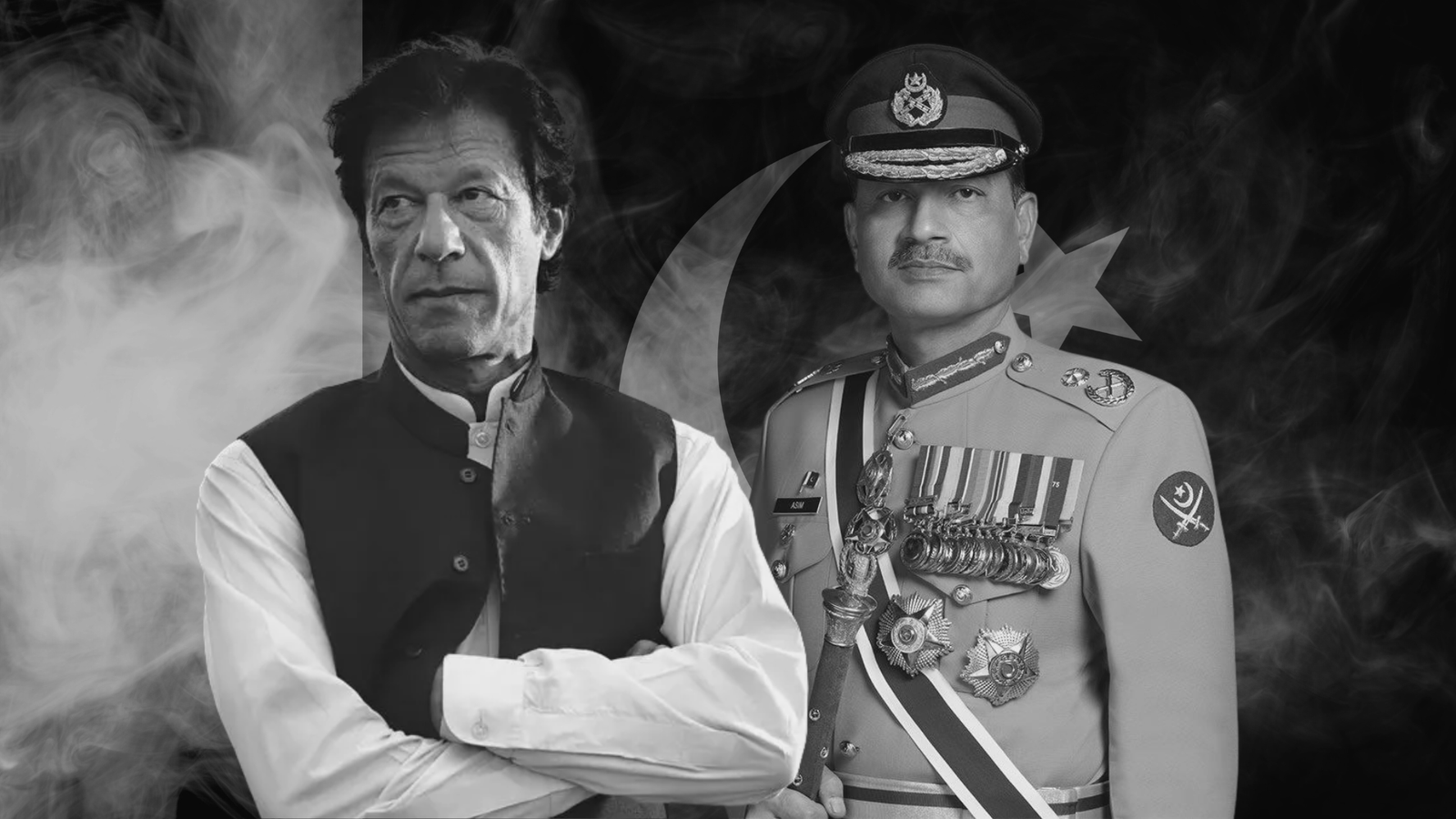
In the dimly lit dungeon of Adiala Jail in Rawalpindi, where former Prime Minister of Pakistan Imran Khan has been locked up in a solitary cell since August 2023–now marking over 900 days–a paradox of sorts has unfolded. What was initially intended as a lock, stock, and barrel sidelining, silencing, and deprivation of the Kaptaan from Pakistani public space has instead morphed into a unified constituency of “resistants” in the digital age who harness the power of social media to amplify their voices and register their grievances.
This phenomenon may well be termed the “Adiala Paradox”, i.e., the more the combined hybrid civilian-military regime tightens the noose around Khan, the more exponentially his popularity explodes across the digital republic, encompassing of all social media platforms. Something that a Zulfikar Ali Bhutto or a Nawaz Sharif could only envision in some other political life. From AI-generated speeches to constant online mobilization to a dedicated “troll army”, Khan’s incarceration has fundamentally redefined the nature of protests, resistance, and political power in Pakistan.
This article argues that the Adiala Paradox has compelled the hybrid establishment in Rawalpindi and Islamabad into a state of “Constitutional Retorsion”, exemplified by the hasty passages of the 26th and 27th Amendments to the 1973 Constitution of the Islamic Republic, purportedly to preempt any judicial relief to Khan. These consensus-less legislations signal a push by the establishment to legalize and legitimize authoritarianism, while a restless youth demographic battles a digital crackdown. The piece discusses the limitations of such countermeasures and enquires whether they have strengthened Khan’s populist movement in actuality, far from public gatherings in the form of his trademark jalsas.
Mechanics of the Paradox: From the Street to the Screen
The Adiala Paradox did not emerge in isolation but through a sequenced escalation of physical confrontation on the streets, state-led digital repression, and quick technological adaptation by Khan’s loyals within and outside the Pakistan Tehreek-e-Insaaf (PTI). It can be traced back to May 9, 2023, when Khan’s initial arrest triggered nationwide protests that targeted military installations, Army generals’ residences, and other infrastructure, resulting in violence, anarchy, and subsequent arrests that led to accusations of “digital terrorism” against PTI supporters. This particular event marked a direct clash between populist mobilization in the country and the hard power of the establishment, and the crackdown that followed in the forms of arrests, haphazard trials, surveillance, and digital vigilantism quickly curtailed street momentum (Shahid & Abbas, 2025). As Bibi and Khan (2024) argue in a working paper, internet governance tools like shutdowns and content removals were weaponized by the Pakistani state to fragment physical dissent, yet they inadvertently pushed PTI towards devolved social media strategies.
Constitutional Retorsion: The 26th and 27th Amendments
The establishment’s response to an intractable Khan and his unyielding popularity has manifested in hasty, consensus-less constitutional changes designed to preempt judicial relief and further entrench military dominance in the country. The 26th Amendment (passed in October 2024) fundamentally altered judicial appointments by empowering a parliamentary committee–dominated by handpicked establishment loyalists–to select the Chief Justice of Pakistan and other Supreme Court justices, while introducing fixed three-year terms for the Chief Justice, a hitherto independent constitutional position in the country. Critics, including Khan himself, in smuggled messages and open letters, described it as a tool to “sanctify electoral dacoity” and undermine the Supreme Court’s independence, particularly in light of the court delivering rulings seen as favourable to the PTI by the establishment in the aftermath of the 2024 elections. The amendment’s overnight passage amidst allegations of coercion and opposition boycotts signaled an executive push to rein in a judiciary perceived as a potential avenue for Khan’s reprieve.
Building on this, the 27th Amendment (enacted in November 2025) elevated Army Chief Field Marshal Asim Munir to the newly and exclusively created post of the Chief of Defense Forces (CDF), granting him unified command over the army, air force, and the navy, alongside a lifetime of immunity from prosecution of any kind, retention of military rank and privileges, and also the right to remain in uniform post-retirement. These provisions, critics argue, constitutionalize military supremacy and provide a legal firewall against future accountability for establishment figures. In the context of Khan’s incarceration, the amendments appear as preemptive strikes: closing perceived legal loopholes beforehand that might enable his release, while legalising the regime’s securitized approach to dissent and politcking.
Such “constitutional retorsions” reflect the hybrid establishment’s anxiety. Rather than neutralizing Khan, these specific amendments have framed him as a martyr battling an entrenched elite, amplifying narratives of injustice across social media platforms.
Digital Resistance: From AI Speeches to Troll Armies and Virtual Mobilization
Khan’s physical isolation has been countered by an explosion of digital innovation that fundamentally redefined protests in Pakistan, transforming incarceration into a catalyst for virtual leadership and narrative control. As Yilmaz (2023) elucidates in his analysis of digital authoritarianism in hybrid regimes–particularly in the Global South–social media platforms become battlegrounds where repressed opposition forces leverage religious populism (e.g., Riyasat-e-Madina) to contest state surveillance (PECA), often flipping tools of control into instruments of resistance (p. 145). In Imran Khan’s case, this manifests through AI-generated content and online mobilization that more or less sustains PTI’s momentum despite a severely restrictive environment.
Early examples include the December 2023 virtual rally, where PTI deployed AI-generated voice cloning (using sophisticated tools like ElevenLabs) to deliver a 4-minute speech by Khan based on smuggled notes, overlaid on archival footage and an AI avatar–garnering millions of views within and outside Pakistan despite internet throttling (Malik & Siddiqui, 2025, p. 220). This innovation draws from broader trends in digital resistance, as discussed by Akhtar (2022), who argues that neoliberal power structures in Pakistan are increasingly challenged by a tech-savvy middle-class that amplifies populist narratives during crises like political imprisonments (pp. 112-115). The tactic recurred during the 2024 election cycle, with AI-crafted “victory speeches” declaring PTI’s moral triumph amid disputed results, effectively bypassing censorship and redefining jailed leadership as omnipresent (Yilmaz & Saleem, 2022/2024, p. 15).
By 2025-2026, especially after news circulated that Khan has been incommunicado since December 2025, digital proxies have intensified. Smuggled messages, family-led prayer sit-ins outside Adiala (especially by Khan’s sisters), and diaspora amplification sustain momentum (led by Khan’s London-based sons). A dedicated “troll army” and youth-driven content creators flood platforms such as X with memes, short videos, and hashtags framing Khan’s plight as national persecution, thereby echoing Shahid and Abbas’s (2025) observation that moral disgust at state tactics fuels anti-military sentiment through agile and adoptive online campaigns (p. 132). Recent health controversies related to Khan, which included a brief 20-minute eye diagnosis at PIMS hospital on January 24, with little to no information passed to his family or supporters, have fueled viral outrage. PTI has portrayed it as deliberate endangerment, and Khan himself reportedly responded that death in jail would constitute “martyrdom” (Ahmed & Rahman, 2025/2026, pp. 50-52).
This digital republic transcends geography: secured apps, VPNs, and offshore servers evade bans on platforms such as X. The youth demographic–frustrated by economic stagnation, unemployment, palpable rigging, and everyday corruption–finds agency in online mobilization, turning Adiala into a symbolic rallying point rather than isolation, as Bibi and Khan (2024) note in their study of internet governance contestations (p.575).
Limitations of Countermeasures and the Backfire Effect
The regime’s digital crackdowns–expanded surveillance via Web Monitoring System 2.0, VPN restrictions, and recent PECA amendments criminalizing “digital terrorism”, and nationwide internet disruptions–aim to fragment resistance, yet these measures often backfire. As detailed in Human Rights Watch (HRW) and Amnesty International’s joint report (2024-2025), tools like Lawful Intercept Management System target PTI networks, but shutdowns only drive users to decentralized alternatives, amplifying global backlash (p. 18). Shutdowns and visible repression (visa denials to Khan’s sons, water cannons on peaceful sit-ins) engender international sympathy and domestic moral outrage, aligning with Mufti’s (2024) pinpoint critique of democratic backsliding through punitive administration (p. 10).
The 26th Amendment, followed by the 27th, intended to fortify establishment control, but have instead reinforced perceptions of authoritarian overreach, alienating moderates and galvanizing the restless youth. Rather than weakening Khan’s movement, they have shifted it from jalsas to persistent, low-visibility digital endurance, which has proved to be more resilient against physical suppression, as the Carnegie Endowment for International Peace (2024) argues in its analysis of governance through punishment (pp. 5-7).
In essence, the Adiala Paradox reveals a fundamental irony: the more the establishment tightens its grip through legal and digital authoritarianism, the more it inadvertently strengthens Khan’s narrative of victimhood and resistance. This dynamic questions whether such countermeasures ultimately consolidate power or sow the seeds for broader populist resurgence in Pakistan’s fractured polity, as Ziring (1980/2024 re-edition) reflects in his updated epilogue on the enigma of political development (p.278).
Footnotes:
- Akhtar, A. S. (2022). The struggle for hegemony in Pakistan: Fear, desire and revolutionary horizons. Pluto Press. (Referenced for middle-class digital networks and populist challenges during crises; pp. 112–115). Link: https://www.plutobooks.com/9780745345093/the-struggle-for-hegemony-in-pakistan/
- Yilmaz, I. (2023). Digital authoritarianism and its religious legitimization: The cases of Turkey, Indonesia, Malaysia, Pakistan, and India. Palgrave Macmillan. (Core for digital authoritarianism flipped into resistance; p. 145). Link: https://link.springer.com/book/9783031465994
- Yilmaz, I., & Saleem, R. A. M. (2022/2024 updated). The nexus of religious populism and digital authoritarianism in Pakistan. Populism & Politics, 4(3), 1–25. European Center for Populism Studies. (Religious framing in digital resistance; p. 15). Link: https://www.populismstudies.org/wp-content/uploads/2022/12/PP-4-3-Yilmaz-Saleem.pdf (updated version via ECPS site)
- Ziring, L. (1980/2024 re-edition). Pakistan: The enigma of political development. Routledge. (Updated epilogue on political enigmas and power shifts; p. 278). Link: https://www.routledge.com/Pakistan-The-Enigma-of-Political-Development/Ziring/p/book/9780367657772
- Ahmed, F., & Rahman, S. (2025/2026). Social loafing among PTI supporters during the imprisonment of Imran Khan: The role of leadership absence and collective factors. Journal of Political Psychology, 48(1), 45–67. (Psychological aspects of digital revival amid isolation; pp. 50–52).
- Bibi, S., & Khan, A. (2024). Contestations of internet governance and digital authoritarianism in Pakistan. International Journal of Politics, Culture, and Society, 37(4), 567–589. (Internet governance and backfire of shutdowns; p. 575). Link: https://link.springer.com/article/10.1007/s10767-024-09456-7 (Springer)
- Malik, H., & Siddiqui, N. (2025). Artificial intelligence as a tool of digital resistance: The case of PTI vs. establishment in Pakistan. Journal of Regional Studies, 12(2), 210–232. (AI tactics in resistance; p. 220).
- Mufti, M. (2024). Democratic backsliding and public administration in Pakistan's hybrid regime. Policy Studies, 45(3), 1–20. (Punitive measures and backsliding; p. 10).
- Shahid, A., & Abbas, M. (2025). The titanic battle between PTI and Pakistani military for the hearts and minds of the Pakistani public. In Pakistan's political landscape: Hybrid regimes (pp. 123–145). Oxford University Press. (Narrative battles and moral disgust; p. 132).
- Amnesty International & Human Rights Watch (joint insights, 2024–2025). Reports on Pakistan's punitive state and mass surveillance (e.g., "Shadow of Control," Amnesty 2025). (Surveillance tools and backfire; p. 18). Link: https://www.amnesty.org/en/documents/asa33/xxxx/2025/en/ (Amnesty annual reports; search for Pakistan digital rights)
- Carnegie Endowment for International Peace (2024). Governance through punishment in Pakistan. (Punitive governance and narrative endurance; pp. 5–7). Link: https://carnegieendowment.org/publications
- Al Jazeera (2023, December 18). Pakistan’s Imran Khan delivers AI-generated speech to campaign from prison. (December 2023 virtual rally details). Link: https://www.aljazeera.com/news/2023/12/18/pakistans-imran-khan-delivers-ai-generated-speech-to-campaign-from-prison
- Al Jazeera (2025, November 11). How would Pakistan's 27th Amendment reshape its military and courts? (27th Amendment overview). Link: https://www.aljazeera.com/news/2025/11/11/how-would-pakistans-27th-amendment-reshape-its-military-and-courts
- BBC (2025, November 14). Pakistan's army chief gets more powers and lifelong immunity. (27th Amendment and Munir's role). Link: https://www.bbc.com/news/articles/c9d6w1glz3qo
- International Commission of Jurists (ICJ) (2024, October 21). Pakistan: 26th Constitutional Amendment is a blow to the independence of the judiciary. (26th Amendment critique). Link: https://www.icj.org/pakistan-26th-constitutional-amendment-is-a-blow-to-the-independence-of-the-judiciary
- The Guardian (2026, January 28). Imran Khan's health in 'grave danger' after eye blockage diagnosis, party says. Link: https://www.theguardian.com/world/2026/jan/28/imran-khan-pakistan-health-eye-condition-prison
- Wikipedia (2024–2025 entries). Twenty-sixth Amendment to the Constitution of Pakistan; Chief of Defence Forces (Pakistan). Links: https://en.wikipedia.org/wiki/Twenty-sixth_Amendment_to_the_Constitution_of_Pakistanhttps://en.wikipedia.org/wiki/Chief_of_Defence_Forces_(Pakistan)
The views expressed are those of the authors and do not represent the views of CNAWS.
ImageSource: CNAWS


