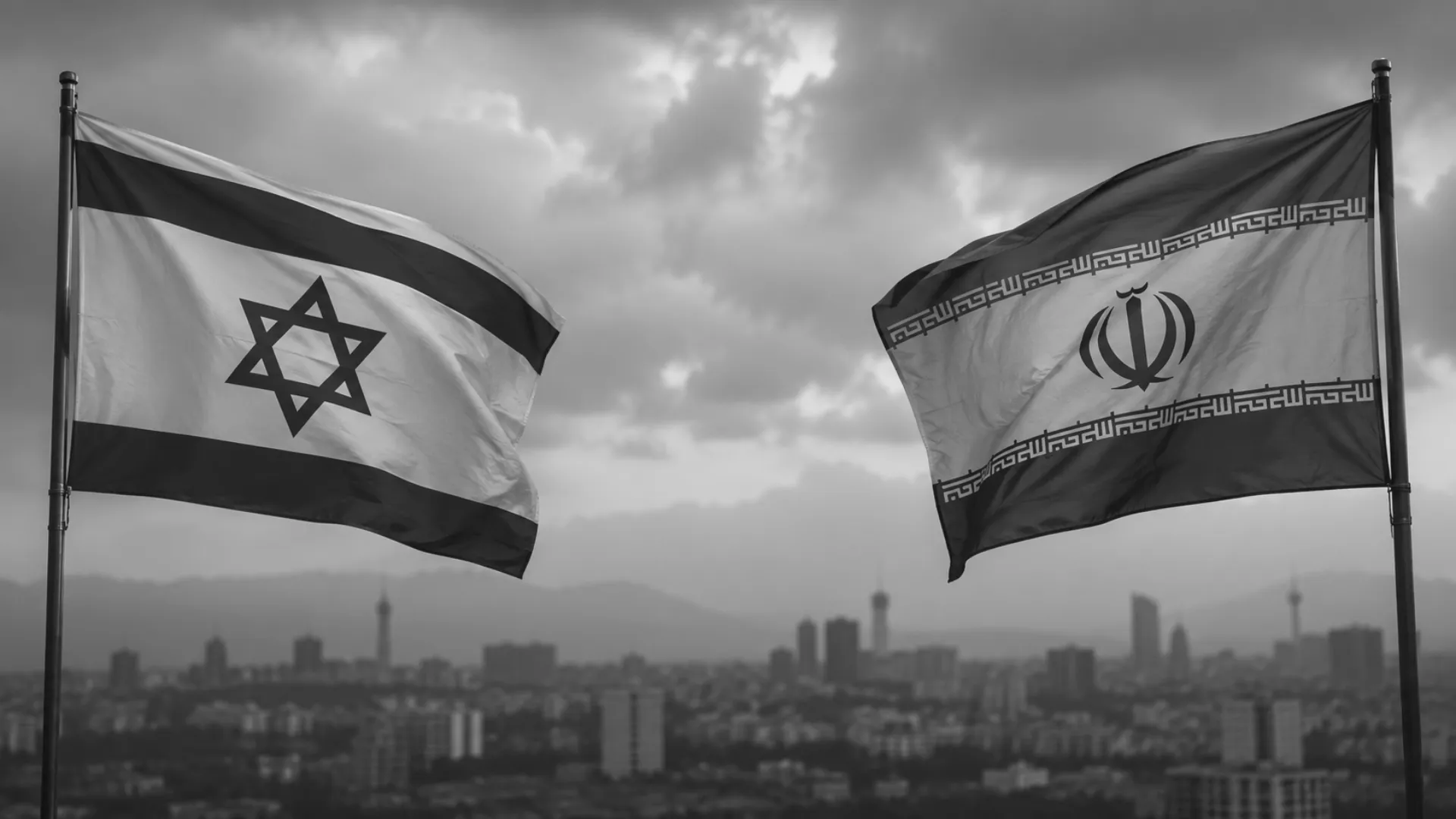
The Israel Iran Shadow War Has Ended: The Return of Direct Deterrence in West Asia

The End of an Era of Strategic Ambiguity
For more than three decades, the rivalry between Israel and Iran has been understood through the concept of the shadow war. Unlike conventional interstate conflicts, this competition relied on covert operations, proxy organizations, cyber attacks, maritime sabotage, intelligence operations, and targeted assassinations. Both states sought to impose costs on one another while avoiding a direct military confrontation that could escalate into a regional war. Strategic ambiguity became an instrument of deterrence. Neither side denied the existence of the conflict, but both carefully managed its visibility.
Recent developments suggest that this framework no longer captures the realities of the regional security environment. The unprecedented exchange of missiles and drones between Israel and Iran, coupled with increasingly public military signalling by both governments, indicates that the shadow war has entered a new phase. The competition is no longer defined by plausible deniability or indirect coercion. Instead, deterrence is increasingly exercised through overt military action directed against the territory of the adversary.
This transformation represents more than an escalation in hostilities. It marks a fundamental change in the strategic logic governing one of the Middle East's most consequential rivalries. Rather than relying primarily on proxy actors such as Hezbollah, Hamas, or Iraqi militias to impose costs, both Israel and Iran have demonstrated a willingness to employ their own conventional military capabilities to establish deterrence. In doing so, they have shifted from a model of proxy mediated coercion to one of direct but calibrated interstate confrontation.
This article argues that the Israel Iran shadow war has effectively ended. A new security architecture is emerging in which limited interstate military exchanges are becoming an accepted component of deterrence. While both states continue to avoid full scale war, they increasingly view direct military retaliation as a necessary instrument for maintaining credibility. This evolution has significant implications not only for Israel and Iran but also for the wider strategic landscape of West Asia.
The Strategic Logic of the Shadow War
The shadow war emerged because both Israel and Iran recognised the severe costs associated with conventional interstate conflict. Israel possessed clear military advantages in terms of air power, intelligence collection, missile defence, and technological sophistication. Iran, constrained by sanctions and lacking comparable conventional capabilities, adopted an asymmetric strategy centred on regional influence and proxy warfare.
Following the 1979 Islamic Revolution, Tehran gradually developed what many analysts describe as the Axis of Resistance, a network of state and non state actors that included Hezbollah in Lebanon, Hamas and Palestinian Islamic Jihad in Gaza, Shia militias in Iraq and Syria, and later the Houthis in Yemen. These organisations served multiple strategic purposes. They expanded Iranian influence across the region, created multiple fronts against Israel, and provided Tehran with a degree of strategic insulation. Military operations conducted by these groups rarely resulted in direct military retaliation against Iranian territory.
Israel responded by developing what its defence establishment referred to as the Campaign Between Wars. Rather than waiting for a major conflict to erupt, Israel sought to continuously degrade Iranian military capabilities through intelligence operations, cyber attacks, targeted assassinations, and precision air strikes. These operations targeted Iranian weapons transfers to Hezbollah, military infrastructure in Syria, nuclear scientists, and facilities associated with missile development.
Both strategies reflected a common objective. Neither government sought decisive military victory. Instead, each aimed to gradually weaken the strategic position of the other while avoiding actions that might trigger uncontrolled escalation.
The defining feature of this period was strategic ambiguity. Although responsibility for many operations was widely understood, governments often refrained from official acknowledgment. This ambiguity allowed political leaders to satisfy domestic audiences without forcing their adversaries into immediate retaliation. In effect, plausible deniability functioned as an informal crisis management mechanism.
The shadow war therefore represented a carefully calibrated balance between coercion and restraint. Violence remained continuous, but escalation remained limited because both parties accepted unwritten rules governing the competition.
Why the Shadow War Broke Down
The gradual collapse of this strategic equilibrium did not occur overnight. It was the cumulative result of political, military, and technological developments that steadily reduced the effectiveness of covert competition.
The Hamas attacks of 7 October 2023 fundamentally altered Israeli threat perceptions. For Israeli policymakers, the attacks demonstrated that Iran's regional network had evolved into an integrated system capable of imposing strategic surprise. Rather than viewing Hamas, Hezbollah, and other groups as separate challenges, Israeli security planners increasingly interpreted them as interconnected components of a broader Iranian strategy.
This perception encouraged a shift in Israeli military doctrine. Operations increasingly targeted not only proxy organisations but also the infrastructure supporting Iranian regional influence. Senior officers of the Islamic Revolutionary Guard Corps operating in Syria became direct targets. Logistics networks, command centres, and weapons depots associated with Iranian activities experienced sustained military pressure.
Iran simultaneously confronted a strategic dilemma. Continued restraint risked undermining the credibility of its deterrence strategy, particularly after repeated Israeli strikes against senior military personnel and regional assets. Domestic political considerations further complicated Tehran's calculations. The Islamic Republic has consistently presented itself as the principal defender of resistance against Israel. Failure to respond visibly to Israeli operations carried significant reputational costs both domestically and across its regional network.
The result was a gradual abandonment of strategic ambiguity. Military responses became increasingly public. Responsibility was openly acknowledged. Missile attacks were accompanied by official statements emphasising national resolve rather than denying involvement.
The exchange of hundreds of missiles and drones between the two states during 2024 represented a watershed moment. Although both governments carefully calibrated their military actions to avoid triggering all out war, the significance of these exchanges extended beyond their immediate military effects. They established a new precedent in which direct interstate military action became an accepted instrument of strategic communication.
In previous decades, proxy organisations absorbed much of the confrontation between Israel and Iran. Today, these actors remain important but increasingly operate alongside direct state action rather than replacing it. The centre of gravity has shifted from covert competition toward overt deterrence.
This transition fundamentally changes how escalation should be understood. During the shadow war, the principal challenge involved identifying responsibility for covert actions. In the emerging security environment, responsibility is rarely contested. Instead, the central question concerns whether each side can calibrate retaliation without crossing thresholds that neither wishes to breach.
From Proxy Deterrence to Direct Deterrence
The transition from proxy warfare to direct military signalling reflects a broader transformation in deterrence itself. Traditional analyses often portray deterrence as the successful prevention of conflict through credible threats of retaliation. The evolving Israel Iran rivalry suggests a more complex reality. Deterrence is no longer maintained by avoiding military confrontation altogether. Instead, it increasingly depends upon carefully controlled demonstrations of military capability.
Direct missile strikes, drone operations, and precision attacks have become instruments of strategic communication. Their purpose extends beyond immediate military damage. They are designed to reassure domestic audiences, signal resolve to adversaries, and reinforce the credibility of future threats.
In this sense, limited military exchanges are no longer evidence that deterrence has failed. Rather, they have become part of the mechanism through which deterrence operates.
This emerging model may be described as direct deterrence under controlled escalation. Unlike the shadow war, where ambiguity reduced escalation risks, the new model relies on visibility. States increasingly believe that openly demonstrating military capability strengthens deterrence by removing doubts about political resolve.
Yet this approach also carries inherent risks. Each successful exchange may encourage future retaliation while gradually normalising interstate military confrontation. Over time, the distinction between controlled escalation and uncontrolled war becomes increasingly difficult to sustain.
Technology Has Changed the Escalation Ladder
The transition from proxy warfare to direct deterrence has been accelerated by technological innovation. Advances in precision guided missiles, unmanned aerial systems, satellite intelligence, cyber capabilities, and integrated air defence networks have fundamentally altered the cost benefit calculations of interstate conflict. These technologies have reduced the political and operational barriers that once made proxy warfare the preferred instrument of competition.
For much of the twentieth century, projecting military power over long distances required sophisticated air forces, overseas bases, and significant logistical support. Today, relatively inexpensive drones and precision missiles allow states to strike strategic targets hundreds or even thousands of kilometres away without deploying conventional forces. This transformation has compressed the escalation ladder. Political leaders can now conduct limited military operations while exercising greater control over their scale and intensity.
Israel has invested heavily in a multilayered air defence architecture comprising Iron Dome, David's Sling, Arrow 2, and Arrow 3 systems, supported by advanced intelligence, surveillance, and reconnaissance capabilities. These systems have significantly enhanced Israel's ability to intercept ballistic missiles, cruise missiles, and drones while providing decision makers with greater confidence in responding to external threats.
Iran has pursued a different technological trajectory. Unable to match Israel's conventional air power, Tehran has developed one of the region's largest missile and drone arsenals. Ballistic missiles, cruise missiles, and long range unmanned aerial systems have become central components of Iran's deterrence strategy. Rather than seeking air superiority, Iran aims to impose unacceptable costs on its adversaries through saturation attacks that overwhelm defensive systems.
The interaction between offensive and defensive technologies has produced a paradox. Improvements in missile defence reduce the expected damage from limited attacks, thereby lowering the perceived risks of retaliation. At the same time, expanding missile inventories encourage more frequent demonstrations of military capability because leaders believe they possess greater flexibility in calibrating responses. Technology therefore contributes simultaneously to stability and instability. It enhances deterrence by increasing defensive resilience while also encouraging more frequent military signalling.
Artificial intelligence, satellite imagery, commercial reconnaissance platforms, and open source intelligence have further eroded the value of strategic ambiguity. Military movements that might once have remained hidden are now monitored in near real time by governments, private companies, and independent analysts. As transparency increases, covert operations become more difficult to sustain, reinforcing the shift toward overt military communication.
The strategic consequence is clear. Technological innovation has not eliminated conflict but has transformed its character. Precision warfare has become an everyday instrument of statecraft rather than an exceptional measure reserved for major wars.
Regional Security in a New Era
The end of the shadow war carries implications that extend well beyond Israel and Iran. It reshapes the broader security architecture of West Asia by altering the strategic calculations of regional and external powers alike.
For the Gulf monarchies, the shift toward direct interstate confrontation presents both opportunities and risks. Countries such as Saudi Arabia and the United Arab Emirates have sought to reduce regional tensions through diplomatic engagement with Iran while simultaneously strengthening defence cooperation with the United States. The emergence of overt Israel Iran military exchanges complicates this balancing strategy. Gulf states increasingly recognise that future conflicts could involve missile trajectories crossing their airspace, attacks on critical infrastructure, and disruptions to energy exports regardless of whether they are direct participants.
This reality has accelerated discussions surrounding integrated regional air and missile defence. Intelligence sharing, early warning systems, and coordinated interception capabilities are becoming central elements of regional security planning. Although political differences continue to constrain formal military alliances, the practical necessity of defending against long range missile and drone attacks has created new incentives for security cooperation.
The United States also confronts a changing strategic environment. For decades, Washington managed regional stability by deterring Iran, supporting Israel's military superiority, and maintaining a substantial forward military presence. The rise of direct interstate deterrence increases the complexity of this role. American forces stationed across the region are more likely to become exposed to spillover risks arising from rapid military escalation. At the same time, Washington must reassure regional partners while avoiding entanglement in conflicts that neither side intends to expand.
The implications extend to nuclear politics as well. Although neither Israel nor Iran currently seeks nuclear war, repeated conventional military exchanges increase the importance of strategic signalling surrounding nuclear capabilities. Israel's longstanding policy of nuclear ambiguity and Iran's advancing nuclear programme introduce an additional layer of uncertainty into future crises. Even if conventional operations remain limited, policymakers must consider how military escalation might interact with broader questions of nuclear deterrence and strategic stability.
Perhaps the most important regional consequence concerns the declining utility of proxy warfare as the primary mechanism of influence. Proxy organisations will remain important components of Iran's regional strategy, but they are no longer the exclusive instruments through which Tehran projects power. Similarly, Israel is increasingly willing to impose costs directly on Iranian military assets rather than focusing solely on intermediary actors. This evolution narrows the political distance between competition and conventional war.
The Limits of Controlled Escalation
The emerging model of direct deterrence rests on an important assumption: that military escalation can be carefully calibrated and politically managed. Recent events appear to support this proposition. Despite unprecedented exchanges of missiles and drones, neither Israel nor Iran has sought prolonged conventional war or territorial conquest. Both governments have demonstrated a preference for limited operations designed to communicate resolve rather than achieve decisive battlefield victory.
Yet history offers reasons for caution.
Many major wars have begun with political leaders believing that escalation could be controlled. The outbreak of the First World War remains the classic example of how limited military decisions, alliance commitments, and misperceptions combined to produce catastrophic consequences that few policymakers anticipated.
The risks facing Israel and Iran differ in important respects, but the underlying logic of escalation remains relevant. Each cycle of retaliation creates opportunities for miscalculation. A missile that causes unexpectedly high civilian casualties, a successful strike against senior political leadership, or an intelligence failure that misinterprets military intentions could rapidly alter political calculations on both sides.
Domestic politics further complicates crisis management. Public expectations, media scrutiny, and nationalist narratives often reduce the flexibility available to political leaders during periods of confrontation. Governments may feel compelled to respond more forcefully than strategic logic alone would dictate in order to preserve domestic credibility.
Technological sophistication does not eliminate these risks. Precision guided weapons reduce operational uncertainty but cannot remove political uncertainty. Military planners may accurately predict the physical effects of an attack while remaining unable to anticipate its political consequences.
The greatest danger therefore lies not in deliberate decisions to wage full scale war but in the gradual normalisation of direct military exchanges. As overt retaliation becomes increasingly routine, political leaders may underestimate the cumulative effects of repeated escalation. What begins as a carefully calibrated demonstration of resolve can gradually evolve into a cycle of action and reaction that becomes progressively more difficult to contain.
Conclusion: Beyond the Shadow War
The concept of the shadow war has shaped scholarly and policy debates on Israel Iran relations for more than three decades. It captured an era in which covert operations, proxy organisations, and plausible deniability enabled both states to compete without crossing the threshold into open interstate conflict.
That era is rapidly drawing to a close.
The strategic competition between Israel and Iran has entered a new phase characterised by direct military signalling, overt retaliation, and increasingly visible demonstrations of force. Missile strikes, drone attacks, and precision operations are no longer exceptional events but emerging instruments of deterrence. Military confrontation has become part of the language through which both states communicate resolve.
This transformation requires a corresponding shift in analytical frameworks. Policymakers should move beyond viewing every regional crisis through the lens of proxy warfare alone. The more pressing challenge is understanding how direct interstate deterrence functions in an era of precision strike technologies, integrated missile defence, artificial intelligence, and compressed decision making.
Whether this new model proves sustainable remains uncertain. Limited military exchanges may preserve deterrence in the short term, but they also increase opportunities for miscalculation and unintended escalation. The assumption that every crisis can be carefully managed becomes more difficult to sustain as military interactions become more frequent and technologically sophisticated.
The central strategic question for West Asia is therefore no longer whether Israel and Iran can avoid direct conflict. That threshold has already been crossed. The more important question is whether they can institutionalise a form of controlled deterrence without allowing repeated military exchanges to evolve into a wider regional war. The answer will shape the future security architecture of the Middle East far more profoundly than the shadow war that preceded it.
References
- Eisenstadt, Michael. Iran's Military Strategy: Evolution and Future Prospects. Washington Institute for Near East Policy, 2019.
- Freedman, Lawrence. Deterrence. Cambridge: Polity Press, 2004.
- Freedman, Lawrence. Strategy: A History. Oxford: Oxford University Press, 2013.
- International Institute for Strategic Studies. The Military Balance 2025. London: Routledge, 2025.
- Stockholm International Peace Research Institute. SIPRI Yearbook 2025: Armaments, Disarmament and International Security. Oxford: Oxford University Press, 2025.
- Schelling, Thomas C. Arms and Influence. New Haven: Yale University Press, 1966.
- Waltz, Kenneth N. Theory of International Politics. Reading, MA: Addison Wesley, 1979.
- Posen, Barry R. The Sources of Military Doctrine. Ithaca: Cornell University Press, 1984.
- Byman, Daniel. A High Price: The Triumphs and Failures of Israeli Counterterrorism. Oxford: Oxford University Press, 2011.
- International Crisis Group. The Israel Iran Conflict: Managing Escalation in the Middle East. Brussels, 2025.
- Carnegie Endowment for International Peace. From Shadow Combat to Open Conflict: The Israel Iran War and Regional Reverberations. Washington, DC, 2025.
- Institute for National Security Studies. The Israel Iran War and Its Strategic Implications. Tel Aviv, 2025.
The views expressed are those of the authors and do not represent the views of CNAWS.
Image Source: ChatGPT