

Can Bangladesh Join a Maritime Coalition Without Losing Strategic Autonomy?

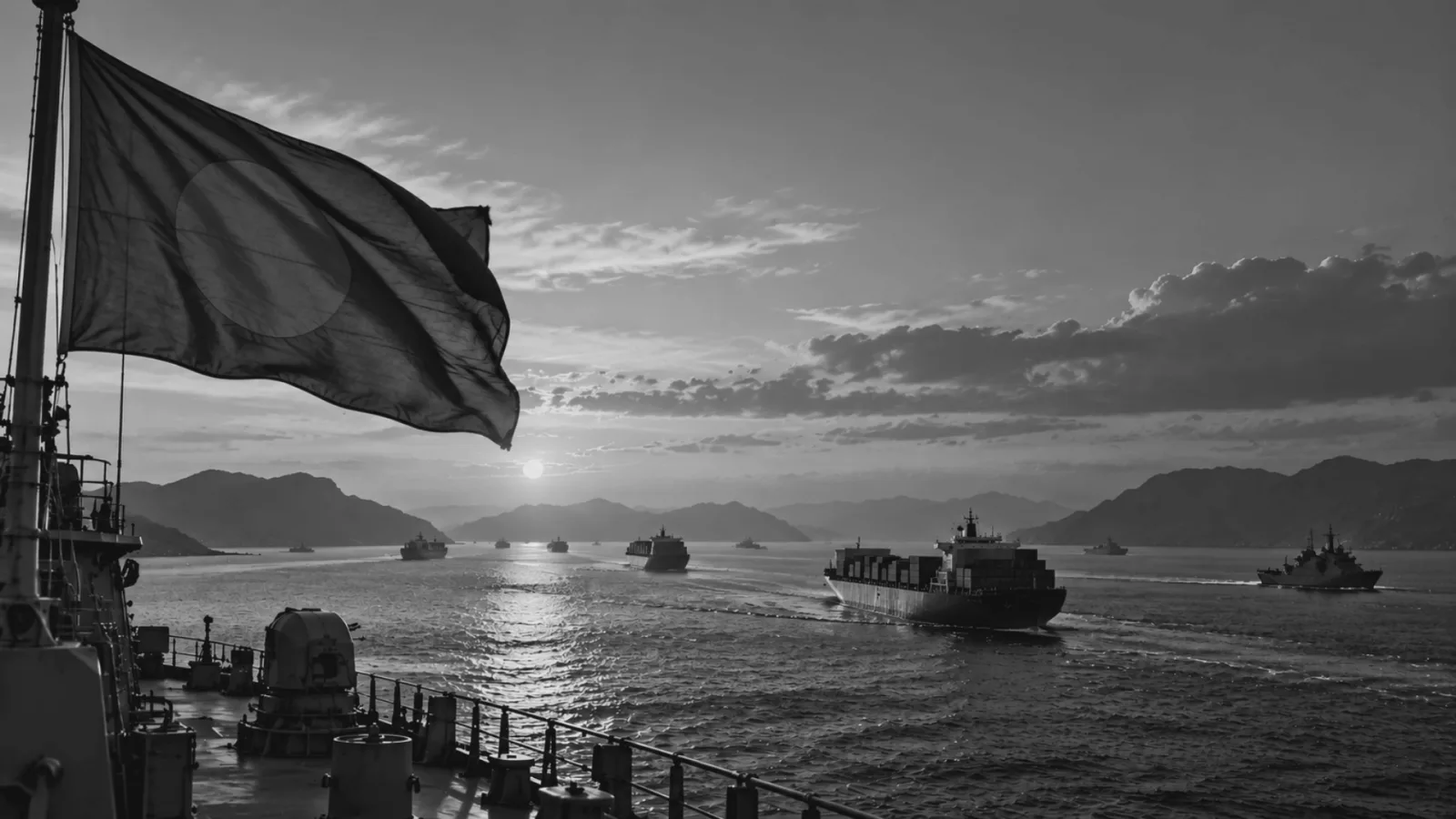
Bangladesh’s decision to join the Saudi-led Multinational Maritime Defense Coalition has reopened a familiar question in its foreign policy: how far can Dhaka cooperate on security without allowing cooperation to become geopolitical alignment? The coalition has a legitimate purpose. Saudi Arabia says the initiative is designed to protect freedom of navigation, trade routes and energy supplies in the Red Sea, Bab al-Mandab and Gulf of Aden, and Bangladesh has repeatedly supported lawful and uninterrupted navigation through international waterways. The strategic issue is therefore not whether maritime security matters to Bangladesh. It does. The issue is how Bangladesh can participate without narrowing the diplomatic flexibility that has long been one of its foreign-policy assets.
The National Interest is real- but it has limits
Bangladesh is deeply exposed to disruptions in global shipping. Its exports, energy imports and supply chains depend on sea lanes connecting Asia with the Middle East and Europe. The July 2026 Houthi blockade and attacks on Saudi-linked shipping created direct risks to those routes. Dhaka consequently had a defensible economic reason to support a coalition aimed at keeping the Red Sea and Bab al-Mandab open.
That interest, however, does not automatically justify an open-ended military role. Economic exposure creates a reason to cooperate, but not a blank cheque for military commitments. Bangladesh’s most immediate security environment remains the Bay of Bengal, the Indian Ocean approaches, the Myanmar frontier and the protection of its own trade and energy flows. Participation in a distant coalition should therefore be tied to a clearly defined national interest rather than to political solidarity with any regional bloc. The government should also explain what concrete capability Bangladesh is contributing, what operational area is covered, and whether Bangladeshi personnel or assets could be exposed to combat beyond defensive maritime tasks. Those questions are not signs of opposition to the coalition; they are normal tests of whether a security commitment is proportionate to the interest it is meant to protect.
A defensive coalition can still create political signals
Saudi Arabia has described the coalition as purely defensive and has stated that it does not target any country, organisation or other coalition. That distinction matters. It reduces the case for portraying Bangladesh’s participation as an anti-Iran move or as automatic entry into a wider Middle Eastern confrontation.
But strategic perception does not depend only on official language. Intelligence sharing, joint planning, coordinated maritime operations or deployments near an active conflict zone can acquire political meaning beyond their formal purpose. Bangladesh therefore needs to know the coalition’s rules of engagement, command arrangements, intelligence-sharing procedures, mission boundaries and withdrawal mechanisms. Without those safeguards, a limited contribution to maritime security could gradually produce expectations that Dhaka never intended to accept. Dhaka should seek written clarity on whether decisions require consensus, whether members may opt out of specific operations, how classified information will be handled, and what happens if an incident involving a member state triggers escalation. A coalition can remain defensive only if its institutional rules make defensive restraint possible in practice.
Strategic autonomy requires conditions- not distance
Strategic autonomy does not mean avoiding every coalition. For a middle power, autonomy is better understood as the ability to cooperate selectively while retaining the freedom to say no when missions move beyond national interests. Bangladesh can support freedom of navigation while maintaining working relations with Saudi Arabia, Iran and other regional actors at the same time.
Three conditions would make that position more credible. First, Bangladesh should publicly define its role as maritime protection, information sharing, search and rescue, escort support or other defensive tasks consistent with international law. Second, any expansion into offensive action should require a separate national decision rather than follow automatically from coalition membership. Third, Dhaka should continue diplomatic engagement with states outside the coalition so that participation is not interpreted as entry into a permanent strategic axis.
Bangladesh should contribute where it has comparative strength
Bangladesh does not need to imitate larger naval powers to be useful. It has experience in international peace operations, disaster response, maritime law enforcement and protecting commercial shipping interests. Contributions built around maritime domain awareness, search and rescue, humanitarian assistance, medical support, training and information exchange would allow Dhaka to add value without taking on commitments disproportionate to its capabilities.
This approach would also connect external maritime cooperation to domestic priorities. Lessons from the Red Sea can improve Bangladesh’s own maritime situational awareness, port resilience and contingency planning in the Bay of Bengal. It can also sharpen planning for rerouted shipping, higher insurance costs, emergency fuel supplies and disruptions to container traffic when distant chokepoints become unstable. These are areas where maritime security connects directly with economic security. Security partnerships are most valuable when they strengthen national capacity rather than create permanent dependence on another state’s strategic agenda.
A coalition should not become an identity
Bangladesh’s long-standing principle of ‘friendship to all, malice towards none’ has never required passivity. It has allowed Dhaka to work with competing powers without treating every partnership as a declaration of allegiance. The Saudi-led maritime coalition can fit within that tradition if Bangladesh keeps its mandate narrow, transparent and reversible.
The real test will come if the coalition’s mission expands. If it remains focused on freedom of navigation and defensive maritime security, Bangladesh can justify participation on economic and security grounds. If it evolves into a wider military contest among Middle Eastern powers, Dhaka should be prepared to limit or reconsider its role. Parliament, the foreign ministry and the security establishment should periodically review whether the mission still matches Bangladesh’s stated interests and whether the costs remain proportionate. Strategic autonomy is preserved not by refusing cooperation, but by ensuring that cooperation never removes the freedom to choose.
The views expressed are those of the authors and do not represent the views of CNAWS.
ImageSource: ChatGPT


