

The Quiet Transformation of Conflict in Balochistan - Part 2

Strategic Reorientation of the Insurgency
The ongoing transformation of violence in Balochistan is not accidental. It reflects a deliberate strategic shift by insurgent groups away from symbolic insurgency toward a more calculated model of denial and disruption. This shift is best understood in the context of accumulated operational experience, political stagnation, and the rising strategic value of the province.
For much of its recent history, the insurgency in Balochistan relied on visibility. Attacks were frequent but often limited in scale and impact. They served to signal resistance rather than to impose sustained costs on the state. That model has gradually lost effectiveness. Repeated low-impact attacks failed to alter the political trajectory or meaningfully challenge state control. Over time, insurgent groups appear to have internalised this limitation.
What is emerging now is a transition toward impact-driven violence. The objective is no longer to demonstrate presence, but to impose consequences. This is visible in the selection of targets, the timing of operations, and the concentration of lethality within fewer incidents. Each attack is designed to produce operational and psychological effects that extend beyond the immediate event.
This shift is closely linked to the changing strategic environment in Balochistan. The province has gained increased importance due to large-scale infrastructure and resource development projects, particularly under the China-Pakistan Economic Corridor. Projects such as Gwadar Port and the Reko Diq mining initiative have elevated the economic and geopolitical stakes of the region. For insurgent groups, this creates both an opportunity and an incentive. By targeting infrastructure, logistics routes, and security forces associated with these projects, they are able to amplify the strategic impact of limited resources.
The insurgency is therefore adapting toward what can be described as economic warfare. Attacks on roads, convoys, and project sites are not always intended to cause mass casualties. Their primary function is to disrupt, delay, and signal risk. Even low-intensity incidents can shape investor perception, increase operational costs, and complicate long-term planning. In this environment, perception becomes a tool of warfare.
At the same time, there is a parallel effort to erode governance at the local level. Targeted killings of individuals associated with the state or suspected of cooperation are part of a broader strategy of coercion. These acts are selective and purposeful. They aim to weaken informal networks that sustain state presence in remote areas. As these networks erode, the state’s ability to maintain durable control becomes increasingly constrained.
Another driver of this strategic reorientation is the absence of meaningful political accommodation. Periodic attempts at reconciliation have not translated into durable outcomes. This has reinforced a perception among insurgent groups that political pathways are either ineffective or inaccessible. In such a context, violence becomes not only a tool of resistance but also the primary instrument for shaping the operating environment.
The result is an insurgency that is no longer oriented toward rapid escalation or territorial control. Instead, it is structured around endurance. It seeks to impose steady pressure, increase the cost of governance, and exploit vulnerabilities in state deployment patterns. The emphasis is on sustainability rather than spectacle.
This evolution does not indicate a stronger insurgency in conventional terms. It indicates a more adaptive one. By shifting from visibility-based operations to strategically aligned targeting, insurgent groups in Balochistan are attempting to achieve disproportionate effects with limited means. Over time, this approach has the potential to reshape the conflict from a manageable security challenge into a persistent strategic liability.
Insurgent Strategy Typology
The pattern of violence observed in Balochistan is best understood not as a continuation of past insurgent behaviour, but as a transition into a more structured and adaptive strategic model. Based on incident-level data, target selection patterns, and operational evolution, the insurgency can be classified as a protracted attritional insurgency with a strategic targeting bias.
This classification is important because it explains both the restraint and the effectiveness visible in recent trends. The insurgency is not attempting rapid expansion or territorial control. Instead, it is focused on gradually degrading the state’s ability to govern, secure, and economically develop key areas.
In its earlier form, the insurgency in Balochistan relied heavily on visibility. Attacks were more frequent, often opportunistic, and designed to signal presence rather than produce sustained strategic impact. Targeting lacked consistency, and violence was dispersed across a wider geographic space without a clear prioritisation of objectives. This created pressure, but it did not significantly alter the balance between the state and insurgent groups.
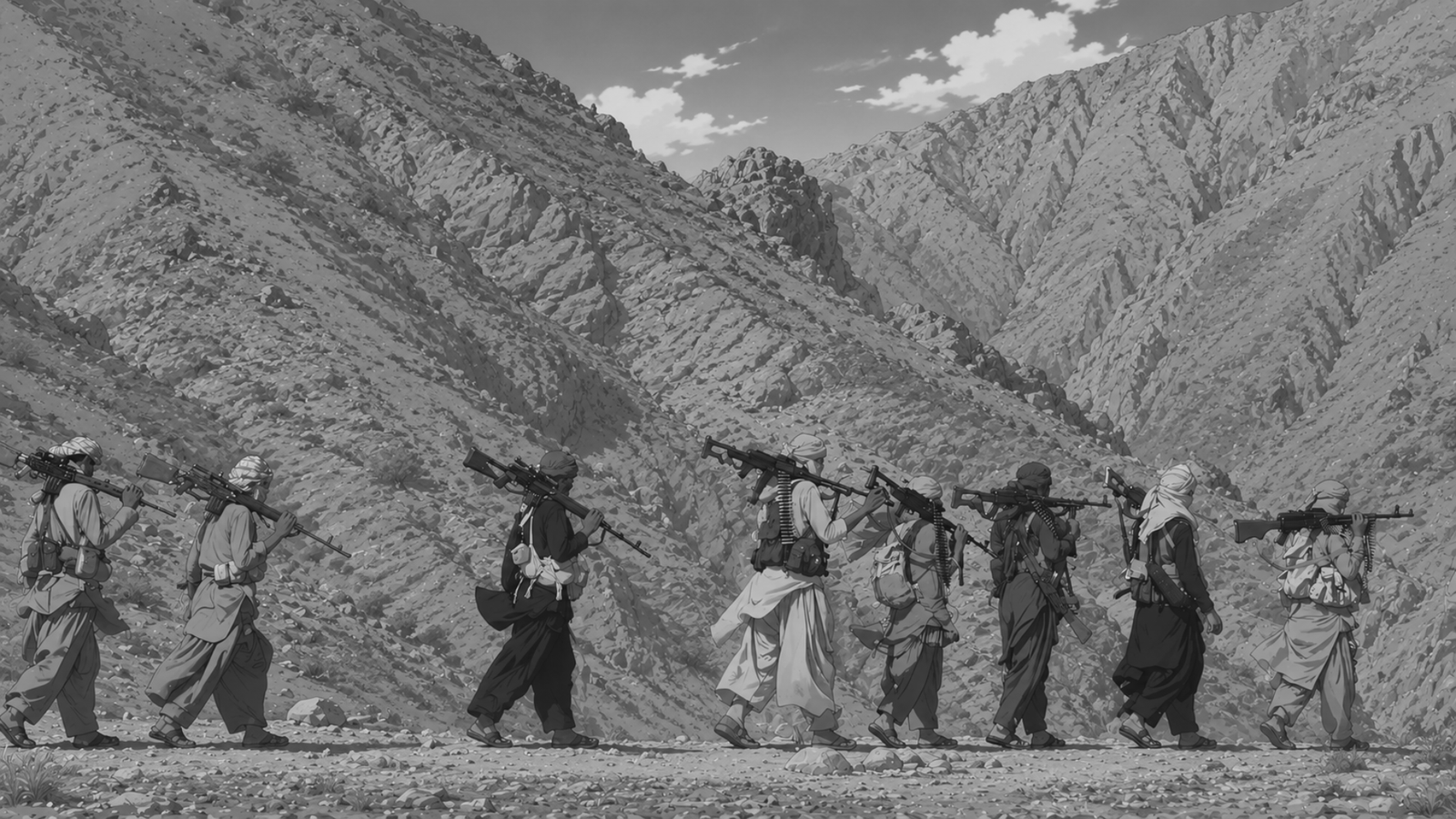
The current model reflects a clear departure from that approach. Violence is now selective, calibrated, and aligned with broader strategic goals. Security forces remain the primary targets, particularly during movement. Convoys and patrol units are repeatedly engaged in predictable environments where insurgents hold a temporary advantage. These engagements are not isolated incidents. They form part of a sustained effort to impose cumulative costs on state deployment.
Geographically, the insurgency has also become more focused. Activity remains concentrated in established strongholds rather than expanding outward in an uncontrolled manner. This suggests a deliberate choice to consolidate influence within core zones where insurgent networks have familiarity, local support structures, and operational depth. Limited spillover into peripheral areas does occur, but it is neither sustained nor central to the broader strategy.
Weapon usage further reinforces this typology. The continued reliance on small arms indicates a preference for low-cost, repeatable operations. At the same time, the selective use of more lethal systems such as automatic weapons and grenade launchers in high-value attacks points to an effort to maximise impact when required. This combination allows insurgent groups to maintain operational tempo without exposing themselves to unnecessary risk.
Another defining feature of this model is the integration of infrastructure and economic targets into the conflict framework. Attacks on transport routes, energy assets, and project sites are not random acts of sabotage. They are part of a deliberate strategy aimed at disrupting economic activity and shaping external perceptions of risk. In doing so, the insurgency extends its impact beyond immediate tactical outcomes into the strategic and economic domain.
The shift from opportunistic violence to strategic targeting also indicates an increased level of organisational coherence. Operations are more disciplined, objectives are clearer, and actions are better aligned with long-term goals. Even when large-scale coordinated attacks are infrequent, their execution demonstrates the capacity to scale when necessary.
Taken together, these elements point to an insurgency that is evolving toward efficiency rather than expansion. It does not seek to overwhelm the state through intensity. It seeks to outlast it through persistence and precision. By concentrating lethality, refining target selection, and maintaining pressure within core areas, insurgent groups in Balochistan are operating within a model designed to achieve gradual but enduring strategic effects.
Insurgency as an Economic Signaling Mechanism
The changing pattern of violence in Balochistan needs to be assessed not only through a security lens but through a geoeconomic one. A review of credible policy analyses, investment risk reports, and regional security assessments shows a consistent trend. Insurgent activity in the province is increasingly aligned with economic pressure rather than purely military confrontation. This reflects a deliberate shift in how insurgent groups seek to generate strategic impact.
At the centre of this transformation is the rising economic value of Balochistan. Over the past decade, projects linked to the China-Pakistan Economic Corridor have redefined the province’s importance within Pakistan’s national strategy and China’s regional outlook. Key assets such as Gwadar Port and the Reko Diq project are part of long-term investment frameworks involving foreign capital, infrastructure integration, and resource extraction.
Analysis of investment behaviour and conflict zones globally indicates that infrastructure-heavy regions are particularly vulnerable to perception-driven disruption. Investors do not withdraw solely due to large-scale destruction. They respond to patterns of instability, unpredictability, and the inability of the host state to ensure continuity. This principle is now visible in Balochistan.
Insurgent groups appear to have internalised this dynamic. Direct confrontation with state forces remains costly and often inconclusive. In contrast, influencing the economic environment requires fewer resources and offers broader strategic returns. Attacks on transport routes, construction activity, and project-linked logistics are therefore designed to create disruption that extends beyond the immediate physical damage.
The logic is cumulative. A single attack on a convoy or a road segment may have limited tactical impact. However, repeated disruptions introduce delays in project execution, increase the cost of security deployment, and raise insurance premiums for contractors and logistics operators. Over time, these factors contribute to an environment where operational planning becomes uncertain.
Credible assessments from economic and security institutions highlight that infrastructure projects in conflict-prone regions are highly sensitive to such patterns. Even low-intensity violence can alter timelines, reduce investor confidence, and slow capital inflow. In Balochistan, this effect is amplified by the scale and strategic visibility of ongoing projects.
Target selection reflects this shift clearly. Insurgent groups are not randomly attacking infrastructure. They are focusing on nodes that connect economic activity to state protection. This includes convoys securing project sites, supply chains moving equipment, and isolated facilities linked to extraction or construction. These targets sit at the intersection of economic ambition and state authority, making them symbolically and operationally significant.
There is also a signalling component directed at external stakeholders. By demonstrating the ability to strike near high-value assets, insurgent groups project reach beyond their immediate operational footprint. They do not need to sustain control over these areas. The ability to disrupt intermittently is sufficient to create doubt about long-term security guarantees.
For stakeholders involved in projects like those under CPEC, the concern is not only physical security but continuity. Infrastructure development depends on stable timelines and predictable operating conditions. When these are repeatedly challenged, even at a low level, the overall cost of engagement increases. This manifests through additional security expenditure, project delays, and more cautious investment decisions.
Another dimension often overlooked is the local perception of these projects. Field studies and regional reporting indicate that segments of the local population view large-scale development as exclusionary, particularly when economic benefits are not evenly distributed. Insurgent groups leverage this perception to frame attacks as resistance against external exploitation. This narrative reinforces their strategic messaging and helps sustain operational support networks.
Taken together, these factors point to a deliberate expansion of the conflict into the economic domain. The insurgency is no longer confined to contesting territory or confronting security forces. It is actively shaping the conditions under which economic development takes place.
This approach does not rely on escalation in the conventional sense. It is built on persistence, selectivity, and timing. By maintaining a steady pattern of disruption, insurgent groups are able to influence decision-making processes far beyond the immediate conflict zone.
Maritime Domain Expansion and Emerging Hybrid Threat
The attack near Jiwani should not be assessed as an isolated tactical incident. It reflects an early indication of a doctrinal shift in the conflict, where insurgent groups are beginning to extend their operational focus from land-based engagements into the maritime domain. This transition, while still limited in scale, carries significant long-term implications.
Balochistan’s geography makes this shift both logical and strategically viable. The province sits along the Arabian Sea, with a long and relatively under-secured coastline that connects remote coastal settlements to key economic and strategic assets. This coastline includes critical nodes such as Gwadar Port and stretches toward smaller but operationally relevant locations like Jiwani along the Makran coast. The same geography that complicates land-based control also creates gaps in coastal surveillance and response.
Insurgent groups appear to be recognising this vulnerability. Traditionally, their operational model has been confined to land, focusing on convoys, checkpoints, and fixed installations. The reported involvement of a maritime-oriented unit linked to the Baloch Liberation Army signals an attempt to expand beyond this constraint. Even if current capabilities remain rudimentary, the intent itself is strategically significant.
The maritime domain offers several advantages to an insurgent force operating with limited resources. Coastal areas are less densely monitored compared to urban or high-security inland zones. Movement along the coastline can be concealed within local fishing activity, and small craft can be used for short-range operations without requiring advanced infrastructure. This lowers the barrier to entry for maritime operations while increasing the complexity of the security environment for the state.
The implications of this shift extend beyond immediate tactical concerns. The emergence of even a limited maritime threat introduces a new dimension to the conflict, transforming it into a hybrid land-sea environment. This complicates force deployment, as security resources must now be distributed across both terrestrial and coastal domains. It also creates new vulnerabilities along supply chains that depend on coastal routes for movement of personnel, equipment, and resources.
Of particular concern is the potential exposure of coastal shipping lanes and near-shore logistics. While there is no evidence at present of sustained targeting of commercial maritime traffic, the proximity of insurgent activity to key sea routes raises the possibility of future disruption. Even low-level incidents in this space can have outsized effects. Maritime trade is highly sensitive to risk perception. A single successful attack or attempted disruption can trigger increased insurance costs, rerouting of vessels, and heightened security requirements.
Energy and infrastructure corridors linked to coastal regions also become more vulnerable in such a scenario. Fuel transport, port operations, and offshore or near-shore installations depend on secure maritime access. If insurgent groups develop even limited interdiction capabilities, they can introduce friction into these systems without needing to sustain continuous operations.
It is important to note that this shift does not yet represent a fully developed maritime insurgency. Capabilities appear nascent, and operations remain sporadic. However, insurgencies do not need immediate capability parity to create strategic impact. Demonstrating intent is often sufficient to alter threat perceptions and force adjustments in state posture.
The Jiwani incident therefore should be viewed as an early signal rather than a peak event. It indicates an exploratory phase in which insurgent groups are testing the feasibility of expanding into a new domain. If this trajectory continues, the conflict in Balochistan may evolve into a more complex and multi-dimensional threat environment, where land-based attrition is complemented by selective maritime disruption.
Regional Externalities and Cross-Border Dynamics
The conflict in Balochistan cannot be assessed in isolation from its regional environment. Its geography alone ensures that internal security dynamics are closely linked to developments across the borders with Iran and Afghanistan. This external dimension does not always manifest in overt forms, but it consistently shapes the operating space in which both the state and insurgent groups function.
Balochistan sits at the intersection of three regions. It borders Iran to the west and Afghanistan to the north, while also opening into the Arabian Sea. This positioning creates a complex security environment where ethnic, economic, and militant networks extend beyond formal state boundaries. The Baloch population itself is distributed across Pakistan, Iran, and Afghanistan, which introduces a transnational dimension to identity and grievance that cannot be contained within a single national framework .
One of the most important implications of this geography is the existence of cross-border movement corridors. These are not always formal or controlled. In many cases, they consist of porous stretches of terrain where surveillance is limited and enforcement capacity is uneven. Such conditions allow for the movement of individuals, small groups, and in some cases resources across borders with relative ease. Research on regional conflict dynamics highlights that insurgent and separatist networks in this belt often operate in fragmented but interconnected ways, shaped by local conditions on both sides of the border .
The Iran-Pakistan border presents a particularly complex case. Both sides face their own variants of Baloch insurgency, which has historically led to mutual suspicion. Each country has, at different points, accused the other of allowing militant elements to use its territory as a refuge. This has occasionally escalated into direct military signalling, including cross-border strikes targeting suspected militant positions. Such incidents underline the fragile nature of coordination and the persistent risk of miscalculation in this space .
At the same time, there are signs of limited convergence of interests. Both Iran and Pakistan face threats from armed groups operating in their respective Baloch regions, which creates an incentive for selective cooperation. However, this cooperation remains tactical rather than structural. It does not eliminate the underlying distrust, nor does it fully address the challenges posed by loosely networked militant actors operating across the border.
The Afghanistan dimension introduces a different set of dynamics. Since the return of the Taliban to power in 2021, the regional security environment has become more fluid. Various militant groups have leveraged Afghan territory as a space for regrouping, training, or transit. While the primary concern for Pakistan has been groups like the Tehrik-e-Taliban Pakistan, the broader instability has indirect implications for Balochistan as well. Analysts and reporting indicate that evolving conditions in Afghanistan can create permissive environments that benefit multiple militant actors, including those operating in Balochistan .
This does not necessarily imply direct state sponsorship or coordinated external backing for Baloch insurgent groups. The evidence for such claims remains contested and politically charged. However, what is clear is that regional instability lowers barriers for movement, communication, and tactical learning. In such environments, even loosely connected networks can derive indirect advantages.
Another dimension of the external environment is intelligence competition. Balochistan’s strategic location and its link to major economic projects make it an area of interest for multiple regional and global actors. This creates a crowded intelligence landscape where narratives, influence operations, and competing strategic interests intersect. While much of this activity remains opaque, its presence contributes to the overall complexity of the conflict.
Taken together, these factors indicate that the insurgency in Balochistan operates within a wider regional ecosystem rather than a closed domestic space. Borders do not function as hard barriers. They act as filters that can slow movement but rarely stop it entirely. This allows insurgent dynamics to interact with broader regional trends, including instability in Afghanistan and security tensions with Iran.
For the state, this creates a layered challenge. Managing the insurgency requires not only internal security measures but also sustained engagement with neighbouring countries and an awareness of how regional developments shape local outcomes. Without addressing this external dimension, efforts to stabilise Balochistan are likely to remain incomplete.
Fragmentation and Coordination Dynamics within the Insurgency
A structured review of credible conflict studies, policy analyses, and incident databases reveals that the Baloch insurgency is shaped by a dual dynamic of fragmentation and selective coordination. This is not a contradiction. It is a defining feature of how the insurgency has evolved over time.
The insurgent landscape in Balochistan consists of multiple armed groups, most prominently the Baloch Liberation Army and the Baloch Liberation Front, along with smaller factions such as the Baloch Republican Army. Academic research and conflict datasets confirm that the presence of multiple groups tends to increase overall levels of violence, as organisations compete for influence, resources, and recruits.
Historically, this fragmentation has constrained the insurgency. Leadership disputes, tribal affiliations, and ideological differences have led to repeated splits. The formation of breakaway factions such as the United Baloch Army is a direct result of internal rifts within larger organisations. These divisions weakened operational coherence and limited the ability of insurgent groups to sustain coordinated campaigns over extended periods.
However, more recent evidence points to a gradual shift toward coordination. A key development in this regard was the formation of the Baloch Raji Aajoi Sangar, which brought together previously rival groups including factions of the Baloch Liberation Army, Baloch Liberation Front, and Baloch Republican Army. This alignment marked a significant attempt to overcome fragmentation and create a platform for joint operational activity.
The impact of this coordination is visible in the nature of recent attacks. There are credible indications of synchronised operations across multiple locations, suggesting at least a minimal level of shared planning or timing. Coordinated attacks carried out across different districts in a single operational cycle demonstrate an ability to scale beyond isolated incidents. This does not imply full organisational integration, but it does indicate functional cooperation when required.
Assessments of the conflict also highlight that this coordination is driven by strategic necessity rather than ideological unity. As pressure from the state increases, insurgent groups face incentives to pool capabilities for high-impact operations. At the same time, they retain decentralised structures to avoid the vulnerabilities associated with centralised command.
This creates a hybrid insurgent architecture. On one level, groups remain distinct, with their own leadership and operational zones. On another level, they demonstrate the ability to align tactically for specific objectives. This balance allows them to maintain resilience while still generating moments of concentrated impact.
Another important trend is the growing dominance of certain groups within this ecosystem. Recent analyses indicate that the Baloch Liberation Army has emerged as the most capable and influential actor within the insurgency, with increased manpower, more sophisticated attacks, and stronger recruitment among local youth. This creates a hierarchy within the insurgent network, where smaller groups may align with or operate alongside more dominant actors rather than compete directly.
There are also indications of expanding external linkages. Reporting suggests that some insurgent elements have benefited from training environments and logistical support networks beyond Pakistan’s borders, particularly in the context of regional instability following developments in Afghanistan. While such linkages remain difficult to verify conclusively, they contribute to the broader adaptability of the insurgency.
Taken together, these dynamics point to an insurgency that is neither fully unified nor structurally fragmented. It operates as a network of semi-autonomous actors capable of cooperation under specific conditions. Fragmentation limits its ability to escalate into a large-scale coordinated campaign across the entire province. Coordination, however, enhances its capacity to deliver high-impact operations at critical moments.
This balance is central to understanding the persistence of the conflict. A fully unified insurgency would pose a more immediate escalation risk. A fully fragmented one would struggle to sustain relevance. The current structure allows the insurgency to avoid both extremes. It remains resilient, adaptive, and capable of generating strategic effects without requiring full organisational consolidation.
Outlook: Likely Trajectories (6 to 24 Months)
An assessment of future trajectories in Balochistan requires moving beyond current patterns and examining how similar insurgencies evolve under comparable structural conditions. A review of conflict studies, regional security assessments, and longitudinal incident data suggests that the trajectory of the insurgency will be shaped by three interacting variables. These include the degree of coordination among insurgent groups, the adaptability of the state response, and the extent to which economic and strategic assets continue to be targeted. Based on these factors, three plausible scenarios emerge over the next 6 to 24 months.
The most likely trajectory is one of controlled attrition. In this scenario, the insurgency continues along its current path of low-frequency but high-impact violence. Attacks remain selective, focusing on security forces, infrastructure, and symbolic targets linked to the state. Groups such as the Baloch Liberation Army are likely to sustain their current operational model, relying on ambushes, targeted killings, and occasional high-visibility strikes.
There is no immediate shift toward territorial control. Instead, the emphasis remains on increasing the cost of governance. Security forces continue to face predictable threats along movement routes, while infrastructure projects experience intermittent disruption. Economic assets linked to the China-Pakistan Economic Corridor remain under pressure, not through sustained attacks but through repeated signaling of vulnerability. Under this scenario, the conflict stabilises in volume but continues to produce strategic effects through accumulation. This is consistent with patterns observed in other mature insurgencies where endurance takes precedence over escalation.
A second trajectory involves strategic escalation. This scenario is less likely in the immediate term but remains plausible if certain conditions converge. Increased coordination among insurgent groups, particularly under umbrella formations such as Baloch Raji Aajoi Sangar, could enable more complex and synchronised operations. This would manifest in multi-district attacks conducted within compressed timeframes, designed to overwhelm response capacity and amplify psychological impact.
In this scenario, there is also a higher probability of expansion into new operational domains. The earlier indication of maritime intent near the Makran coast, combined with the strategic importance of Gwadar Port, suggests that insurgent groups may continue to test coastal vulnerabilities. Energy infrastructure and logistics corridors could also become more prominent targets, particularly if they are perceived as critical to state consolidation efforts. While such escalation would increase visibility and impact, it would also expose insurgent groups to greater countermeasures, making sustained escalation difficult over long durations.
The third trajectory is fragmentation-led decline. This scenario emerges if internal divisions within the insurgency intensify. Historical patterns in Balochistan show that factionalism, leadership disputes, and competition for resources can weaken collective capacity. If coordination mechanisms break down and rivalries deepen, groups may revert to isolated operations with reduced strategic coherence.
In such a case, the overall level of violence may decline or become more erratic. Attacks would continue but lack the coordination required to generate broader impact. The state, under these conditions, would find it easier to contain and disrupt individual networks. However, this does not necessarily lead to conflict resolution. Fragmented insurgencies often persist at lower intensity, sustained by local grievances and limited operational capability.
Across all three scenarios, one constant remains. The conflict is unlikely to disappear in the near term. The structural drivers, including geography, governance challenges, and economic disparities, continue to provide a foundation for insurgent activity. What varies is the form and intensity through which this activity manifests.
At present, the evidence points most strongly toward the controlled attrition model. The insurgency is not showing signs of rapid expansion, nor is it collapsing under internal pressure. It is adapting within its constraints, maintaining a balance between impact and sustainability. This makes the conflict more predictable in pattern but no less significant in consequence.
For policymakers, the implication is clear. The absence of escalation should not be mistaken for stability. The current trajectory allows the insurgency to remain effective without becoming overtly visible at all times. Over a 6 to 24 month horizon, this form of calibrated persistence is likely to remain the defining feature of the conflict in Balochistan.


