What is Supply Chain Security?

1. Introduction
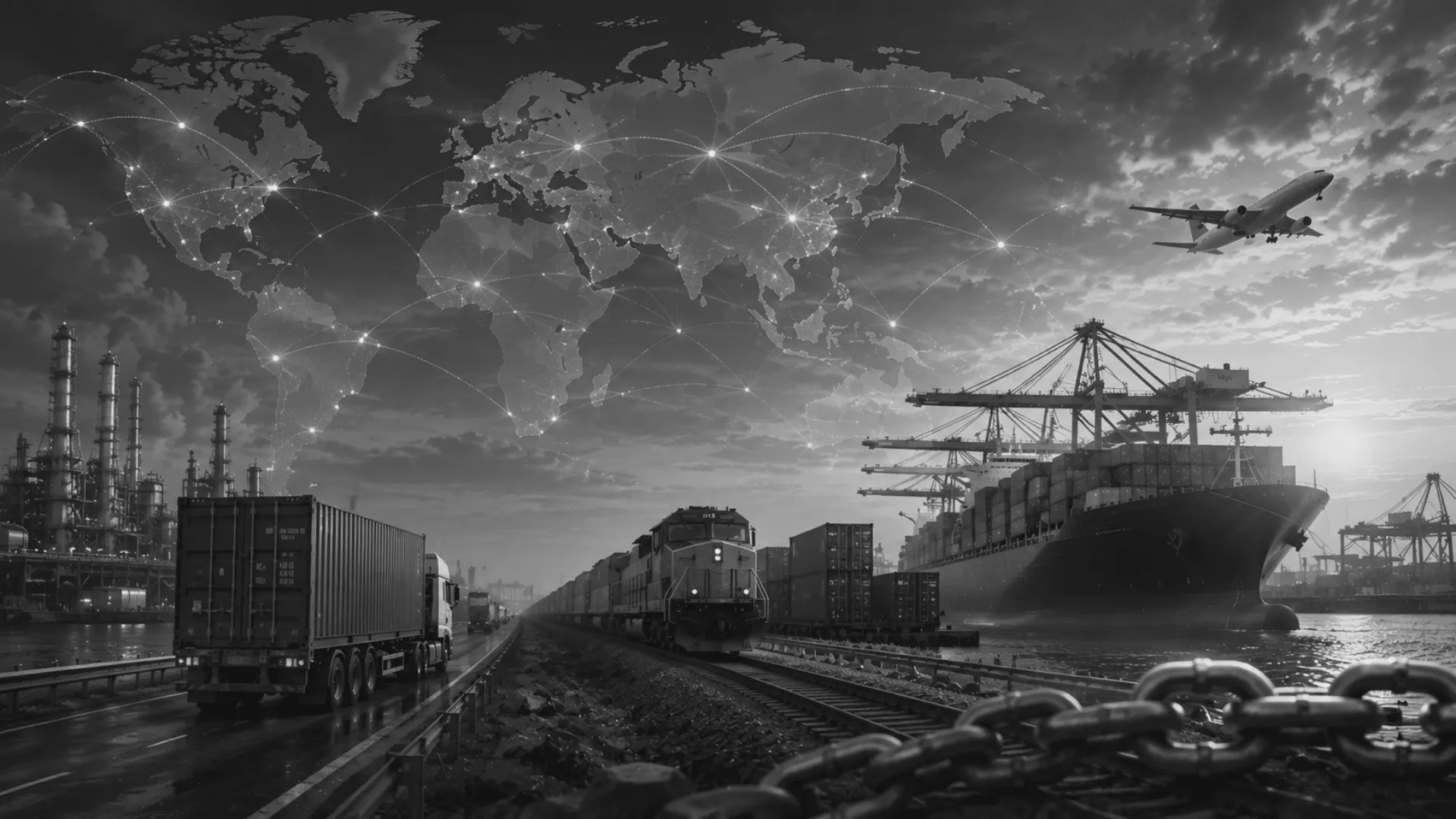
Supply chain security might imply a logistical issue — a warehouse or inventory management, maritime shipping, or container processing. However, as an international security doctrine it is far more consequential, involving the study of the contested architecture of global power. States in contemporary times are employing means to exploit the economic vulnerabilities of nations by controlling the nodes, routes, and dependencies to cripple their financial markets along with conventional military tactics making it a mix of soft and hard power that can be understood as a form of hybrid warfare. Energy resources such as oil, rare earth minerals, semiconductors, pharmaceutical inputs, and digital infrastructure are not merely commodities but are instruments of statecraft. The existing literature on supply chain security focuses more on the commercial aspect– ad valorem custom tariffs, the growth of Customs Co-operation Council and Kyoto Convention on customs and its revision as the Revised Kyoto Convention (RKC) in 1999 aimed at standardizing and harmonizing custom rules to facilitate international trade. It revolves around the modernization of international customs procedures under the aegis of World Customs Union, based on IT-based processing paperless functioning, risk management and Authorized Economic Operator (AEO) programme. Through an IR lens, supply chain security recognises that the flow of goods across the borders is bounded by a complex web of distribution of power, vulnerabilities and coercion in the international system.
2. Definition
Supply chain security refers to the strategies, institutions and alliances that a state fosters to protect its access to vital resources from disruption, exploitation and weaponization by its adversaries. Farrell and Newman (2019), wrote in International Security, arguing that in asymmetric global trade, states with jurisdiction over central routes “weaponize these structural advantages for coercive ends” by employing two principles: the panopticon effect– an ‘I can see what you are doing’ principle where the strong state has access to the valuable supply chain network of the weaker state to identify its vulnerabilities and the chokepoint effect– an ‘I can stop you from using the network’ whereby a powerful state can block access of a country’s companies or banks beyond its boundaries, where the panopticon effect represents the surveillance power while the choke point represents denial power.
Robert Keohane and Joseph Nye also provide a method to identify a state's degree of vulnerability where independence does not imply equal dependence; if A can replace B and B cannot replace A then B is vulnerable. Thus, supply chain insecurity emerges when economic interdependence creates asymmetric vulnerabilities where a state incurs high costs in finding alternatives. David A. Baldwin’s economic statecraft argues that supply chains provide a network through which a state can pursue its foreign policy and national interests.
Etel Solingen in Geopolitics, Supply chains and international relations in East Asia, places global supply chains (GSC’s) within the economic-security nexus and treats GSC as a complex mechanism of economic interdependence that is exposed to geopolitical shocks and interstate conflict or cooperation.
3. Historical Evolution
Supply chain security established its place as a national security matter, post the September 11, 2001, attacks. It was then that the governments recognized that non-state actors can misuse global supply networks, which could lead to catastrophic ends. Various customs-security innovations were introduced like the Customs-Trade Partnership Against Terrorism (C-TPAT) and the Container Security Initiative (CSI) designed to secure physical trade routes to prevent terrorist actions. These initiatives focused more on the physical integrity of cargo while fewer policies were devised for cyber security.
Theoretically, Robert Keohane and Joseph Nye in their book “Power and Interdependence” established that complex interdependence does not dissolve power relations, rather, it restructures them making states more interconnected and more vulnerable (Keohane & Nye, 1977, 8-11). With the advancement of globalization, the decentralization of production across the globe to enhance the efficiency and affordability lead to an increase in asymmetric vulnerabilities which Farrell and Newman categorized as strategic liabilities.
After 2015 there has been a substantial shift from a logistical to a geopolitical framing of the supply chain. With the rise of the US-China rivalry, periodic use of restrictions on rare earth minerals were placed by the latter. Meanwhile, the US, through its CAATSA act, imposed sanctions on countries on transactions from its adversaries. In 2020 the pandemic-induced shocks also highlighted the vulnerabilities of GSC and prompted governments to term supply chain security as "strategic exposure". The recent US-Israel-Iran conflict over the Strait of Hormuz exposed the vulnerabilities over the energy security of South and East Asia and witnessed a surge in energy prices.
Geopolitical disruptions caused by failures of supply chain security compelled the governments to call for reshoring or friend-shoring of critical industries while academic discourse increasingly focusing on these high-technology supply chains centered on “critical industries” — semiconductors, rare earth minerals, batteries as the means of power distribution in the international structure (Roscoe et al., Production, Planning & Control, 2023).
4. Key Components
Supply chain security possesses five intertwined dimensions.
The first is structural power, in which states control the critical chokepoints within the GSC and leverage their position through coercion. Farrell and Newman demonstrate that states controlling important routes, intellectual property, and advanced technology can uniquely position themselves to pressure their adversaries and extend their influence beyond economics into geopolitics.
The second is securitization, whereby the governments consider disruptions in supply chains as existential threats that demand emergency measures. It transforms ordinary policy issues into matters requiring exceptional state action to increase the resilience of the supply chain. Currently, we are witnessing states strengthening their capabilities in critical sectors like chip fabrication, rare-earth processing and pharmaceutical production (Buzan et al. 1998, Security: A New Framework for Analysis).
The third is alliance architecture; the creation of multilateral networks to reduce dependence and increase supply chain diversification such as the Mineral security partnership or the Pax Silica Initiative, the Quad Critical minerals initiative framework which builds collective supply chain resilience to reduce dependence on adversaries.
The fourth is economic statecraft, with the inception and entry into force of RKC several new initiatives have been taken to modernize customs procedure. The use of IT for mapping and routing of vessels, authorized economic operator services have been standardized and sanitization of vessels from the country of origin rather than in the country of destination. Governments also use exports control, investment screening and industrial subsidies to both protect domestic supply chains and restrict adversaries access to critical technologies.
Lastly, through diversification and strategic redundancy, states are securing their supply chains; they are diversifying and decentralizing their production and sourcing across multiple trusted geographies to avoid geopolitical vulnerabilities.
5. Examples
A couple of cases illustrate the concept of supply chain security.
China presents a suitable example, wherein it is responsible for 92 percent of global rare earth production and controls 68 percent of its exports. In 2026 it was observed that Beijing imposed export restrictions on rare-earth sales and magnet exports leading to a surge in neodymium prices by 45 percent which led to disturbance in production across US automotive and defense sectors. The ODI observed that resource geography can be used to leverage diplomatic concessions, which is effectively demonstrated by China. Beijing successfully leverages its raw- material production and export controls to reduce tariffs, which confirms that supply chain vulnerability can be exploited to gain diplomatic concessions.
The semiconductor concentration in East Asia poses a structural risk due to efficiency driven globalization. Taiwan and South Korea alone account for around 78% of chip fabrication, while 95 percent of assembly, testing and packaging units are concentrated in the Indo-Pacific, out of which 28 percent is in China. This represents asymmetric geography of semiconductors production which could make GSC’s vulnerable by cutting of East Asian routes which has lead to the formation of parallel semiconductor strategies like the chips act and semiconductor strategies of US and EU and other such strategies to avoid any state’s coercive action.
6. Why It Matters Today
The contemporary geopolitical scenario treats the supply chain as a strategic instrument of statecraft. In the late twentieth century, complex interdependence was expected to produce greater cooperation whereas in the twenty first century states’ mutual vulnerabilities are exposed through interdependence and are used as tools of diplomacy and coercion to achieve strategic ends. The “fragmentation doom loop” captures this economic dynamic perfectly whereby each state breaks away from the globally integrated system to pursue unilateral supply chain security, through these unilateral decisions, the system becomes more fragile, less stable, thus creating further fragmentation. Academically, supply chain security is not a technical problem but a political problem embedded in the international order— export controls, industrial subsidies are acts of economic statecraft that provide a bargaining leverage to the stakeholders. The Pax silica initiative, the Quad Critical minerals initiative framework are as much an alliance-management mechanism as industrial policies.
The efforts to secure the supply chains of— petroleum, pharmaceuticals, rare-earth minerals, semiconductors and similar critical sectors show how the governments are trying to reach commanding heights in order to reduce vulnerabilities through diversification and strategic positioning yet they remain structurally exposed to the coercive capabilities of the adversaries.
7. Conclusion
The discipline of International Relations in contemporary times considers supply chain security as a security challenge concerned with power, coercion and alliance management managed through economic means rather than military instruments. Farrell and Newman’s concept of Weaponized Interdependence (2019) explains how a state with exclusive jurisdiction over supply routes can exploit asymmetric vulnerabilities through coercion and surveillance to discipline its rivals. Supply chain security is part of a grand strategy whereby states reshape their position and create resilient structures by empowering domestic supply capabilities and forming strategic alliances with viable alternatives to reduce their exposure to coercion while preserving or expanding their own “influencing capacity”. The condition of international anarchy, demands managed interdependence among trusted allies, institutionalization of partnerships whilst mobilizing the domestic workforce to build a resilient infrastructure.
In India’s case, supply chain security is developing not just as an industrial policy but also as a means of strategically positioning itself in the multipolar order. The risk of structural dependence on countries like China, the US as well as Gulf states particularly in electronics, critical minerals, defense technology, energy resources, and APIs enhances India’s vulnerability. To deal with this, New Delhi is devising a dual strategy of empowering the domestic workforce through capacity building and alliance deepening. The US-India Initiative on Critical and Emerging Technology (iCET) was launched in 2022 under the leadership of Prime Minister Modi and President Biden. It is a bilateral framework which aims at enhancing strategic technology and defense cooperation which was further followed by TRUST (Transforming the Relationship Utilizing Strategic Technology Initiative. Its key pillars are AI, semiconductors, critical minerals and Defense & space- and is designed to build a “trusted and resilient innovation base” (White House Fact Sheet, January 2025).
Under iCET, Micron and GlobalFoundries have established their semiconductor units in India while US Space Force companies are partnering with Indian-startups to develop defense grade chips.
India is now transforming from a peripheral consumer to a trusted supply chain partner, increasing its resilience against coercion and building network power which is considered as the currency of the 21st century.
References:
Badhotiya, G. K., G. Soni, V. Jain, et al. “Assessing Supply Chain Resilience to the Outbreak of COVID-19 in Indian Manufacturing Firms.” Operations Management Research 15 (2022): 1161–1180.
Clayton, Christopher, Matteo Maggiori, and Jesse Schreger. “A Theory of Economic Coercion and Fragmentation.” NBER Working Paper No. 33309. National Bureau of Economic Research, 2024. https://www.nber.org/system/files/working_papers/w33309/w33309.pdf.
Farrell, Henry, and Abraham L. Newman. “Weaponized Interdependence: How Global Economic Networks Shape State Coercion.” International Security 44, no. 1 (2019): 42–79. https://doi.org/10.1162/isec_a_00351.
Giermanski, James. Global Supply Chain Security. 1–5.
Keohane, Robert O., and Joseph S. Nye Jr. Power and Interdependence: World Politics in Transition. Boston: Little, Brown, 1977.
ODI. “Critical Minerals Geopolitics in 2026: Risks, Supply Chains and Global Power Shifts.” 2026. https://odi.org/en/insights/critical-minerals-geopolitics-in-2026-risks-supply-chains-and-global-power-shifts/.
Parthiban, M. M., T. Murali, and G. Subramanian. “World Customs Organization and Global Trade: Imprints and Future Paradigms.” World Customs Journal 14 (2020). https://doi.org/10.55596/001c.116425.
Roscoe, Samuel, et al. “Geopolitical Disruptions in Global Supply Chains: A State-of-the-Art Literature Review.” Production Planning & Control (2023). https://doi.org/10.1080/09537287.2023.2286283.
S. Rajaratnam School of International Studies. “The Future of India–US Tech Supply Chain Security Cooperation.” IP26015. January 2026. https://rsis.edu.sg/rsis-publication/idss/ip26015-the-future-of-india-us-tech-supply-chain-security-cooperation/.
SAIS Review of International Affairs. “Strategic Redundancy in Semiconductor Supply Chains: How US-India Cooperation Transforms Global Chip Resilience.” 2025. https://saisreview.sais.jhu.edu/strategic-redundancy-in-semiconductor-supply-chains-how-us-india-cooperation-transforms-global-chip-resilience/.
Solingen, Etel, ed. “Global Supply Chains, Geopolitics, and Trade Wars.” In Geopolitics, Supply Chains, and International Relations in East Asia, 21–132. Cambridge: Cambridge University Press, 2021.
Streatfeild, Jeremy. “A Brief Negotiating History of Customs Valuation in the GATT and WTO.” October 6, 2005.
White House. “Fact Sheet: The United States and India Committed to Strengthening Strategic Technology Partnership.” January 6, 2025. https://bidenwhitehouse.archives.gov/briefing-room/statements-releases/2025/01/06/fact-sheet-the-united-states-and-india-committed-to-strengthening-strategic-technology-partnership/.
The views expressed are those of the authors and do not represent the views of CNAWS.
Image Source: ChatGPT