Unmanned Aerial Vehicles (UAVs) and Their Strategic Impact on Air Power

Introduction
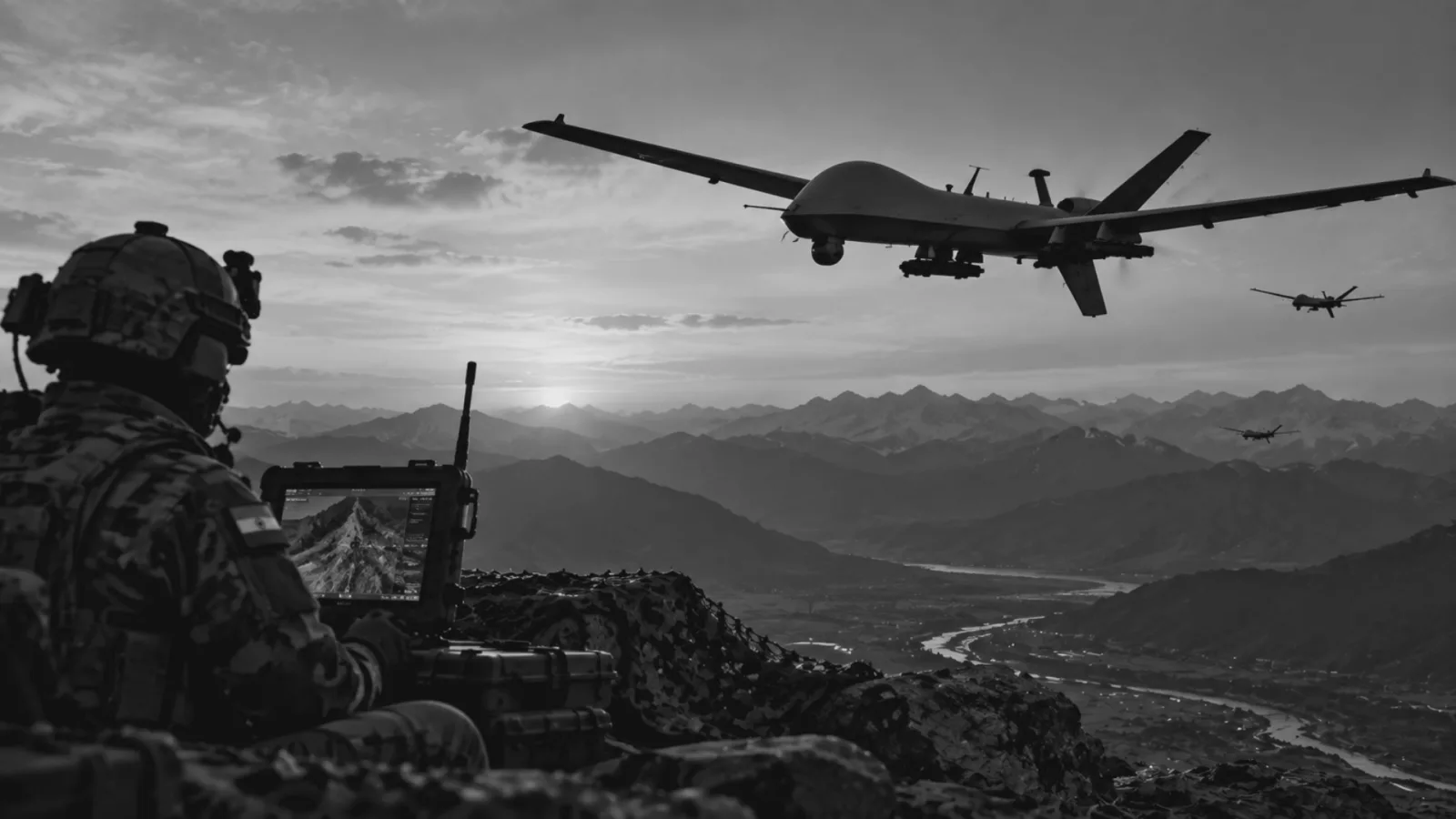
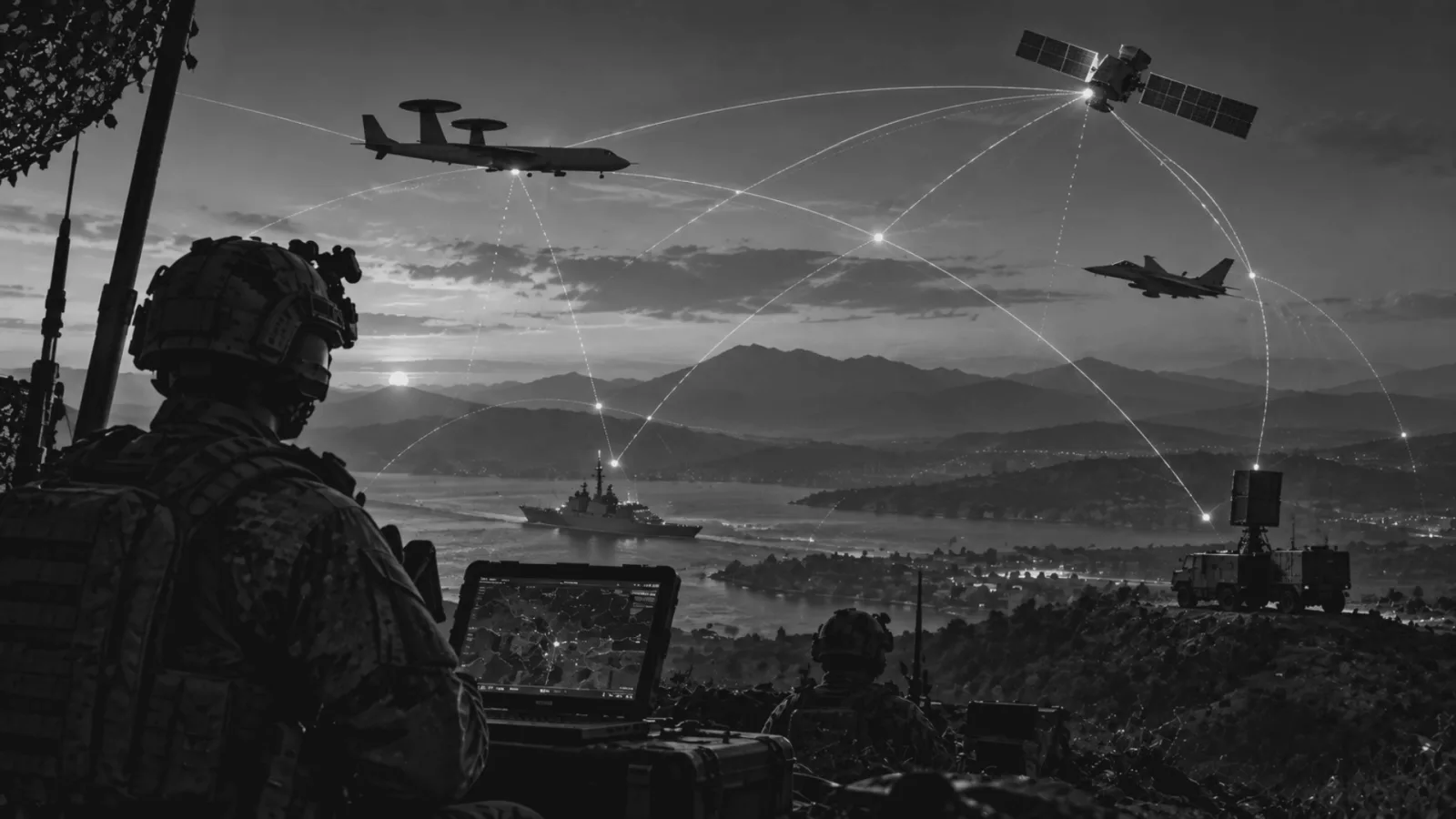
Unmanned Aerial Vehicles (UAVs) are becoming an increasing factor in the evolving environment of military aviation. UAV systems rapidly change the footprint of air power and modern warfare. Airpower has generally been characterized as the capacity of a force to perform with minimum interference by adverse air forces. During the 21st century, the evolution of UAVs revolutionized the traditional ways of air warfare. Their operational deployment in missions has transformed traditional concepts of air power, expelled contemporary doctrine, and demanded a multidomain effort to achieve and sustain air control. UAVs are also a part of precision strike, intelligence, surveillance, and reconnaissance (ISR). UAVs have become revolutionary weapons in contemporary war, restructuring classical ideas of air and strategic power. UAVs are today increasingly used on strike missions, electronic warfare, and logistics support. Their cheapness, stealth, long endurance, and expendability have made them likely substitutes in a range of mission sets. This study aims to examine how UAVs are remaking strategic considerations of air power and how their expanding role is redesigning doctrinal plans towards achieving air dominance. Drawing from the recent conflicts and the attendant changes in doctrine, this research attempts to comprehend how UAVs are altering the dynamics of searching and gaining air power in future and current battlefields.
Present literature provides an uneven but useful foundation. Strategic theorists such as Giulio Douhet argue that air dominance can paralyze enemy systems by targeting key nodes, including leadership and communication.[i] Their perspectives, though rooted in conventional warfare, are increasingly being adapted for asymmetric warfare circumstances. However, by seeing a changing nature of air power, Scharre proposed the concept of autonomous warfare, in which UAVs with artificial intelligence would transform not just tactics but strategy itself.[ii] Gertler chronicled the increasing dependence of the U.S. military on UAVs for ISR and strike missions.[iii] Cdr Rahul Verma argued that autonomous warfare is not a radical revolution, but rather, it is a continuation of empirical reasoning regarding military capability.[iv] Just as the advent of air power changed the way strategic thinking was understood in the 20th century, unmanned systems are increasingly metamorphosing the modern battlefield at a rapid pace.
Historical Evolution of UAVs
The history of UAVs in warfare is one of constant innovations, driven by the demands of war and the will to protect soldiers. It began as early as 1849 when the Austrian military attempted to bomb Venice using hot-air balloons with bombs on board. These initial attempts did not work all that well since many balloons were blown away by the wind, but they did demonstrate that unmanned flights could be used for military objectives.
During the early 1900s, the concept of using UAVs in war gained momentum. In World War I, both Britain and the USA experimented with pilotless planes. British scientists and engineers established the "Aerial Target," a miniature aircraft operated by radio. This was originally tested in March 1917. Inventors in the United States at the same time produced the "Hewitt-Sperry Automatic Airplane" and the "Kettering Bug."[v] These were primitive forms of flying bombs, with no pilot but with gyroscopes and radio controls, and new technology at the time. Even though the UAVs were never used in combat since the war ended before they could be prepared for combat, they proved that unmanned planes could be constructed and operated from the ground.
After the end of World War I, UAV research continued. In 1924, a team of American engineers flew a Curtiss N-9 seaplane under radio control.[vi] This was a significant milestone and showed that UAVs could have uses beyond that of pure experimentation. Then, in the 1930s, the British developed a radio-controlled aircraft called the DH.82B Queen Bee that was used to train anti-aircraft gunners.[vii] The humming noise of this aircraft is where the term "drone" originated. Around the same time, the United States had begun planning its drone program, building the Radio plane to train military personnel.[viii] These drones allowed soldiers to train how to shoot at moving targets without putting their lives in danger.
World War II witnessed more developments. Radio-controlled aircraft were used for target practice and even as weapons by both sides. The United States developed the Interstate TDR, an early unmanned fighter aircraft, and Nazi Germany utilized the V-1 flying bomb, which was like a present-day cruise missile.[ix] The Allies endeavored to use old bombers filled with explosives and radio-controlled, in operations known as Operation Aphrodite.[x] These operations require bravery and often fail, but they reveal the increasing role that UAVs play in combat.
Following the war, UAVs became more reliable and effective. The United States employed drones for the first time in large numbers during the Vietnam War.[xi] The UAVs crossed enemy lines to get snapshots, gather intelligence, and even drop leaflets for psychological warfare.[xii] Some drones were used as decoys to confuse enemy defence, while others helped guide missiles to targets. War became safer for pilots, while armies were equipped with new warfare tools.
Growth of UAV Capabilities in Modern Warfare
UAVs increasingly took on key roles in military operations in the latter part of the 20th and early 21st centuries. Drones today can circle the sky for hours, cameras or weapons on their wings, controlled from miles away, and now they are used for surveillance, attacking targets, and protecting ground troops. The world of warfare has been transformed by drones; pilots can now surveil and strike enemies in combat without risking their lives. Drones, which were initially the simplest of balloons in the 1800s, have evolved into a prominent facet of modern warfare - a prime example of how technology and the necessity of war produce developments.[xiii]
Aircraft and helicopters are now being replaced by UAVs for multiple tasks of the armed forces. Safety is a key reason behind the same. Since drones do not require individuals on board, when the machine is taking risks hence no one is at risk on dangerous missions. Drones have capabilities to fly for long hours, capture photos, conduct ISR, and even launch explosive attacks from a kit the size of a model aircraft. They are cheaper and easier to operate than big aircraft and helicopters. Due to the same reason, currently used for monitoring, target missiles, and striking the enemy without risking pilots’ lives. Drones can undertake more military missions because of advancements in technology. These advancements keep the military safe and operationally capable.
Limitations and Challenges of UAVs
The full potential of UAVs in both military and civilian applications is constrained by several significant issues. In theory, UAVs have modest cargo capacity, poor endurance, and are sensitive to weather conditions.[xiv] While navigating in complicated or hostile situations, communication failures caused by jamming, hacking, or environmental interference create significant operational dangers. Another significant issue is airspace control, as participation of UAVs with manned aircraft requires advanced sense and avoid systems, which are now being developed.[xv] Regulation of UAVs on a global scale is fragmented, with different laws determining their deployment context, which airspace they can navigate, and regulations related to exporting UAVs. There are substantial ethical implications associated with UAV use and autonomous targeting, accountability for civilian deaths, and the moral implications of UAV deployment on both operators and communities. There are also strategic implications pertaining to national security regarding drones built for non-state actors, the threat posed by drone swarms, and the absence of counter-UAV technologies. We must respond to these issues to facilitate using UAVs in a way that is safe, principled, and effective. Issues must be responded to promote the safe, principled, and effective use of UAV technology.
Case Study: UAVs in the Russia–Ukraine War
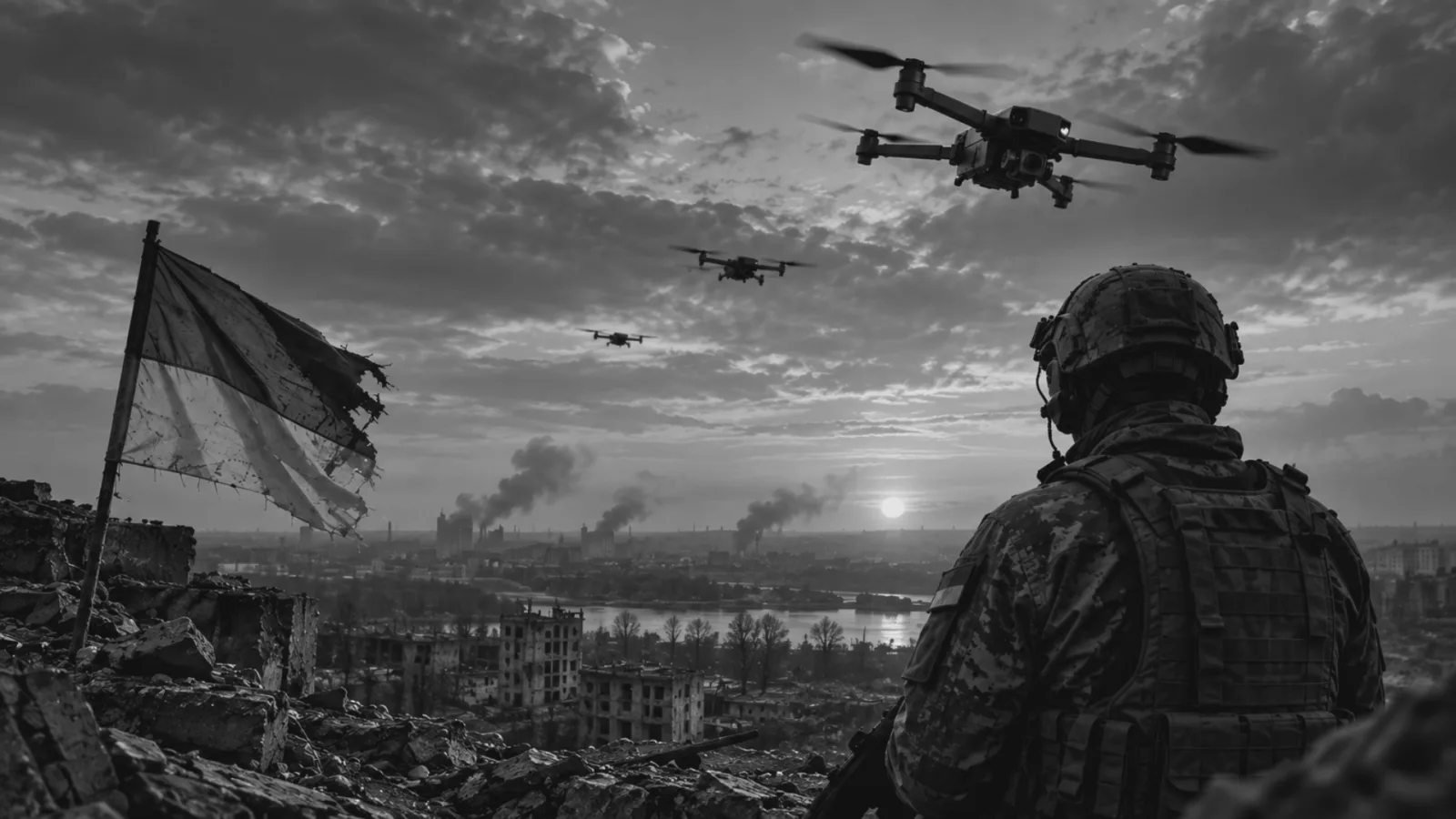
There is a paradigm shift in warfare due to the ubiquitous use of drones in the Russia-Ukraine War. The use of UAVs, or drones, as they are known in the drone community, has been universal in operations to strike targets, adjust artillery, and provide ISR in Russia and Ukraine. Drones have, in many cases, replaced traditional, manned assets, especially in cases where it would be too dangerous to send a pilot. This case study examines the type of drones used in the conflict as well as how they have sometimes replaced piloted air operations.
Among the many famous drones that have been deployed during this war, the Bayraktar TB2, made in Turkey and employed by Ukraine, is one of the most well-known.[xvi] This drone is able to fly high and remain in the air for over 24 hours with a payload of guided missiles.[xvii] During the first period of the war, we saw Ukraine utilize it for the attack and destruction of Russian convoys, air defence systems, and even a warship, which was the Moskva.[xviii] Plus, it provided live targeting information to destroy high-value assets.[xix] As the Russian air defence capabilities improved in accuracy and lethality, the TB2 was used less in an attacking role and more for intelligence, surveillance, and reconnaissance. The TB2 was able to replace manned platforms like the Su-24MR (reconnaissance), Su-25 (ground attack), and MiG-25R (reconnaissance). All of which were vulnerable to Russian surface-to-air missiles and electronic warfare systems.[xx]
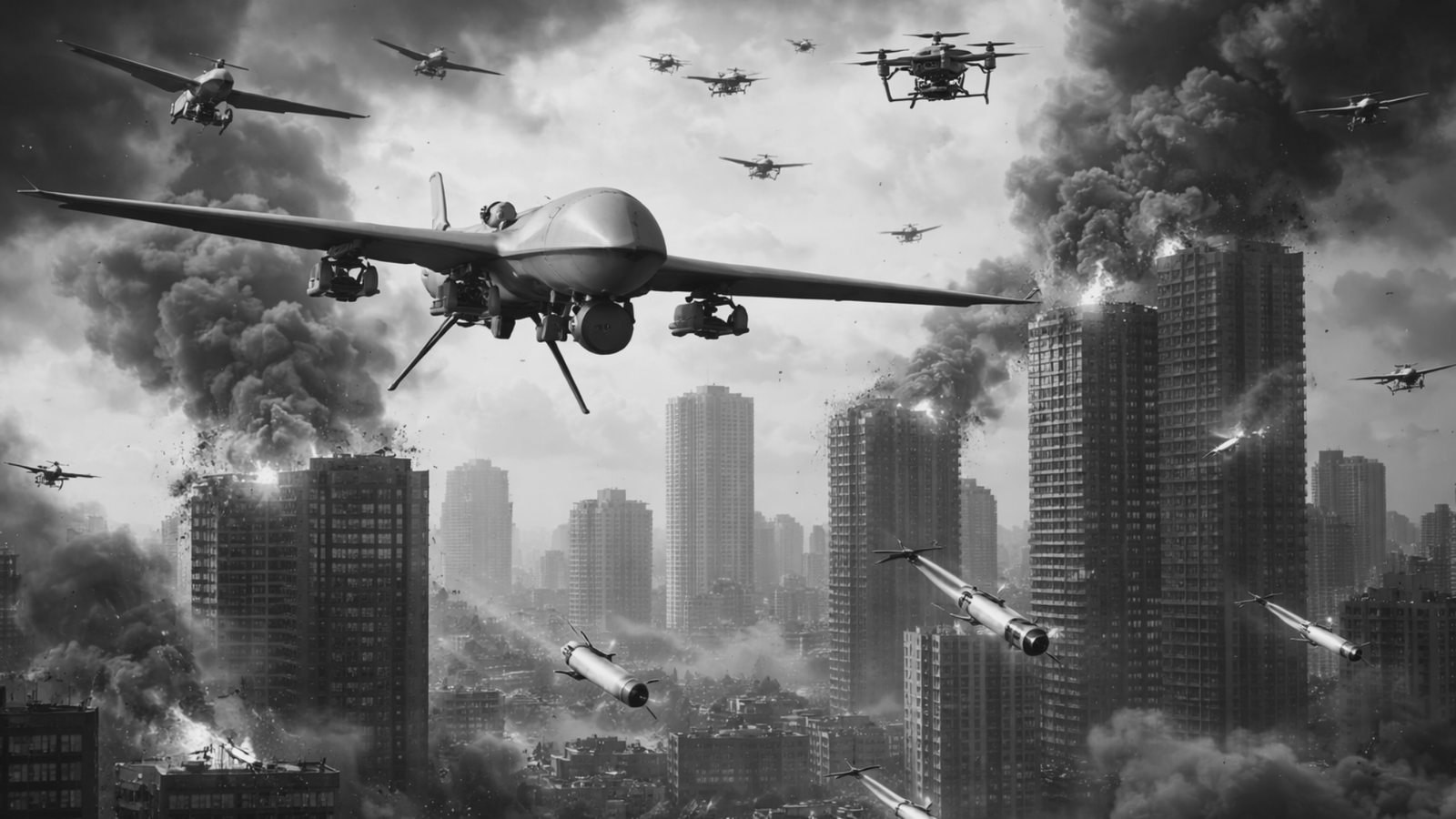
Conversely, Russian forces have utilized the Shahed-136, an Iranian-made loitering munition (i.e., suicide drone) means the Geran-2 for Russian service.[xxi] These are "kamikaze" drones that explode on impact. They are launched in mass, mostly at night, to attempt to blitz Ukrainian air defence, to strike power stations, cities, and military objectives. Shahed drones are a cheaper alternative than the Tu-22M3 and Su-34 long-range bombers, and they can go way further. Using the Shahed drones instead of bombers, Russia can keep pilots' lives intact while reaching out and hitting targets in central Ukraine.
The Lancet is another important drone, which is a Russian loitering munition used to destroy tanks, artillery units, and radars. The Lancet usually takes the back seat as a follow-up to strikes from a Shahed drone, to then hit remaining targets or targets on the move, and due to its ability to be guided and accurate, it is useful for frontline missions as well. It has replaced some of the roles of Su-25 aircraft and attack helicopters, which are now often kept away from the front due to the danger from man-portable air defence systems.[xxii]
Both Ukraine and Russia also use FPV (First-Person View) drones, which are small, fast, and often built using commercial or improvised parts. These drones are manually navigated using a live streaming camera feed for close-range precision targeting of enemy soldiers, shelters, and vehicles. FPV drones are particularly ideal in trench fighting and urban warfare. Furthermore, they are inexpensive and difficult to shoot down and have replaced some of the missions of crewed helicopters and low-flying attack aircraft.
In addition to military drones, both sides use commercial drones like the DJI Mavic and Matrice series.[xxiii] These are widely used for artillery correction, surveillance, and even small attacks. These commercial drones have taken over roles previously performed by scout helicopters or observation planes. They are easy to operate, inexpensive, and can be launched quickly by soldiers on the ground.
Drones Are Replacing Manned Aircraft
There are several reasons why drones are replacing manned aircraft in this war. First, drones are much safer to use because they do not risk a pilot’s life. Second, they are cheaper to produce and operate. For example, where manned bombers may be worth millions, the Shahed-136 drone is only worth a few thousand.[xxiv] Third, drones are able to fly longer missions and make precise strikes, especially with live video. Drones can also take more risks in high air-defence areas, as it is conventional that manned aircraft operate outside an effective range.
Overall, the Russia–Ukraine war has demonstrated that drones can perform various duties previously completed by manned aircraft. They now play a key role in both nations’ air power and military plans. Drones are influencing the future of warfare by providing low-cost, high-impact choices for anything from direct strikes to monitoring. This situation demonstrates that in contemporary battles, unmanned systems are frontline weapons rather than only support equipment.
The Growing Role of Drones in India
India's defence forces are increasingly using drones. In the past, manned aircraft and helicopters were used for most air-related duties, such as transport, assault, and observation. However, drones are increasingly performing many activities. In India, drones are replacing human aircraft and helicopters in some circumstances. Drones are relatively cheap, safer, possibly longer flight times, and do not risk human lives.
For example, the Indian Air Force had manned aircraft like the MiG-25 or Jaguar, which would take photographs of enemy locations for surveillance and intelligence collection. Pilots had to undergo these dangerous and exhausting flights. These days, border surveillance is done by drones like the Israeli-made Heron and Searcher. The drones have long flight hours and send back real-time images to the control centres. The use of drone technology was a decisive factor in the 2020 crisis in Ladakh, as India and China could observe the movements of Chinese soldiers in these high-altitude areas where human assessment was not possible. This reduced the requirement to use helicopters in dangerous flying conditions through a Cheetah or a Chetak.
In the past, India relied on fighter aircraft, such as the Mirage-2000, Su-30 MKI, and MiG-21, for in-combat missions, like airstrikes. For example, Mirage-2000's were the fighter of choice in India's 2019 Balakot bombing. However, India also wants to incorporate precision armed attack drones like the Heron TP and MQ-9B Predator. These drones are very helpful for counterterrorism and precision strikes. They can hit moving, small targets without putting a pilot at risk. In the electronic warfare area, with the intent of jamming or confusing enemy communications and radar, there were manned aircraft like the Jaguar DARIN III and the Su-30; now, there are a couple of drones like SWiFT and CATS Hunter being developed in India that will contain electronic jamming systems. Drones can slip in quietly to confuse the enemy and not risk manned jets.[xxv]
Logistics and High-Altitude Resupply
Helicopters like the Mi-17, Dhruv and Cheetah were used logarithmically to transport supplies to forward military posts in Siachen and Arunachal Pradesh. These stations come under the category of difficult access and challenging weather conditions. Cargo drones are being progressively developed to deliver food, medicine and other small supplies to soldiers on the ground, generally in hard-to-reach locations. For example, for the first time, drones were used to supply goods to troops stationed in Siachen Glacier, where helicopters were being hindered by high altitude and strong winds.
Counterterrorism and Disaster Response
In addition, drones are becoming increasingly common as a substitute for helicopters in anti-terrorist operations and disaster response. In the past, helicopters would go to a forest or a war-torn country to find terrorist hideouts or to evaluate damages during floods. Drones and quadcopters are being used instead and places like Jammu & Kashmir and Naxal-infested areas. Drones can fly in silently, monitor enemy movements, take photographs and drop small bombs. During the Uttarakhand floods, drones assisted in locating stranded people and assessing road damage, and this all made it easy for the rescue teams to prepare for rescues. Consequently, the number of helicopters and crew was down to what is necessary.
Electronic Warfare and Autonomous Systems
The use of artificial intelligence (AI) in drones is also growing in India. HAL (Hindustan Aeronautics Limited) is working on drones like CATS Warrior, which will fly along with fighter aircraft like Tejas and follow pilot commands. These drones will carry weapons, act as decoys, or go ahead of the main aircraft to confuse the enemy. Similarly, India is developing swarm drones, like ALFA-S, which are small drones that fly together and attack a target like a group of bees. These technologies are changing how the Indian Air Force prepares for future wars.
All these changes show that UAVs are not just helping manned aircraft; they are taking over many of their roles. In simple words, wherever a pilot’s life was at high risk or where long hours of flying were needed, drones have become a better choice. India is also planning to buy 31 MQ-9B Predator drones from the United States for the Army, Navy, and Air Force.[xxvi] These will help India patrol the Indian Ocean Region, monitor the LAC with China, and strengthen security in Jammu & Kashmir. Though fighter jets and helicopters will continue to be important, drones are now becoming their strong partners and, in some cases, their replacements. The future of Indian air power will depend on how well we combine both manned and unmanned systems to keep our skies safe.
UAVs Reshaping Contemporary Air Power
The rise of UAVs, or drones, has led to tremendous changes in the use of air power in the context of military operations. UAVs have worked their way into military doctrine and are not just considered a supporting tool; they are steadily becoming operative participants in battlefield strategy. UAVs have moved from a simple surveillance platform to additionally occupying roles in strikes, electronic warfare, and logistics of battlefield operations. Since they do not need a person on board to operate, they are more cost-effective, but people also consider them safer and more suitable for conducting operations in dangerous or remote areas.
The ongoing Russia–Ukraine War helps illustrate how UAVs are replacing manned aircraft in many functional roles. The Bayraktar TB2 and Shahed-136 (multi-purpose UAVs) have played important roles in real-world contexts, while evolving military thinking about combat with UAVs. The war reinforces that UAVs can be used for accurate strikes, target spotting, and saturating enemy air defences with swarm tactics. Manned aircraft, with the Su-25, Tu-22M3, and helicopters specifically, are now at heightened risk and are used far less frequently in high-risk scenarios. The Russia-Ukraine War illustrates that UAVs are moving from supporting the wicked to being the wicked.
Conclusion
India is also seeing a growing role for drones. They are being used for border monitoring, counterterror operations, resupply to high-altitude posts, disaster relief, and more. UAVs such as Israel’s Heron, Lockheed Martin’s MQ-9B, and newer indigenous systems such as the CATS Warrior are part of India’s change to modern drone-based approaches to warfare. Drones reduce helicopter and jet handling in places that put people at more risk. The Indian military is also experimenting with artificial intelligence and swarm drone systems, a clear indicator that wars of the future will involve both machines and smart technologies.
Having said that, it is equally important to know the limitations of drones. For instance, in a high-threat zone, manned aircraft still have advantages over drones related to speed, payload capacity, and decision-making capability. Drones can also be jammed or shot down, as well as disrupted by electronic warfare. Complex missions also require a manned pilot who can make quick decisions and change plans, which is something drones cannot do. Which is why many of the world’s leading militaries (U.S., Russia, India, etc) use a combination of both manned and unmanned platforms for ground operations.
In summary, while UAVs may never fully replace manned aircraft, they have certainly transformed the way air power is employed. In many instances, they are making operations safer, cheaper, and more effective than ever before. Countries' future air superiority strategy will be realised in the unique way they pair drones and manned systems in order to plan their aerial capabilities. As technology progresses, the air forces of the future will not simply fly with pilots in the sky, but with machines in the cloud.
Endnotes:
[i] Giulio Douhet, The Command of the Air, trans. (Washington, D.C.: Office of Air Force History, 1983). Pp. 31-33.
[ii] Paul Scharre, Army of None: Autonomous Weapons and the Future of War (New York: W. W. Norton & Company, 2018), pp. 219–223.
[iii] Jeremiah Gertler, U.S. Unmanned Aerial Systems, CRS Report R42136 (Washington, D.C.: Congressional Research Service, January 3, 2012), pp. 5–7.
[iv] Cdr Rahul Verma (r), “Evolution, Not Revolution: The Unmanned Systems Paradigm Shift,” Indian Aerospace and Defence Bulletin, March 31, 2025, https://www.iadb.in/2025/03/31/evolution-not-revolution-the-unmanned-systems-paradigm-shift/
[v] Norman Polmar, “An Early Pilotless Aircraft,” Naval History Magazine, August 2019, https://www.usni.org/magazines/naval-history-magazine/2019/august/early-pilotless-aircraft
[vi] Thomas P. Ehrhard, Air Force UAVs: The Secret History (Mitchell Institute for Airpower Studies, 2010), pp. 9–10.
[vii] Kenneth Munson, UAVs: The Illustrated History of Unmanned Aerial Vehicles (Leicester, UK: Blandford Press, 1988), pp. 14–16.
[viii] Steven Zaloga, Unmanned Aerial Vehicles: Robotic Air Warfare 1917–2007 (Oxford: Osprey Publishing, 2008), p. 22.
[ix] Ibid., pp. 25–29.
[x] Ibid., p.14.
[xi] Paul G. Fahlstrom and Thomas J. Gleason, Introduction to UAV Systems, 4th ed (Hoboken, NJ: Wiley, 2012), pp. 6–7.
[xii] Richard Whittle, Predator: The Secret Origins of the Drone Revolution (New York: Henry Holt, 2014), p. 32.
[xiii] Dr. Mithilesh Kumar Singh, Unmanned Arial Vehicles (2022; New Delhi: Pentagon Press). Pp. 49-60.
[xiv] Ibid., pp. 45–47.
[xv] Ibid., pp. 92–94.
[xvi] Gary Mortimer, "The History and Effectiveness of the Bayraktar TB2 Drone in Ukraine," sUAS News, June 2023, https://www.suasnews.com/2023/06/the-history-and-effectiveness-of-the-bayraktar-tb2-drone-in-ukraine/.
[xvii] Army Technology Editorial Team, “The Bayraktar TB2 and the role of affordable UCAVs in modern warfare,” Army Technology, June 8, 2022, https://www.army-technology.com/analyst-comment/bayraktar-tb2-modern-warfare/
[xviii] Valius Venckunas, "Bayraktar drone used to 'distract' Russian flagship in attack," AeroTime, April 14, 2022, https://www.aerotime.aero/articles/30757-reports-indicate-that-bayraktar-helped-to-attack-moskva
[xix] Elisabeth Gosselin-Malo, "Are the once-vaunted Bayraktar drones losing their shine in Ukraine?" Defense News, October 31, 2023, https://www.defensenews.com/global/europe/2023/10/31/are-the-once-vaunted-bayraktar-drones-losing-their-shine-in-ukraine/.
[xx] Technology Org Staff, "Does Ukraine Still Have Bayraktar TB2 Drones?" Technology Org, https://www.technology.org/2024/09/10/does-ukraine-still-have-bayraktar-tb2-drones/.
[xxi] Army Recognition Editorial Team, "Exclusive: Russia Develops New Drone Warfare Tactics with Unveiling of Truck-Mounted Geran-2 Loitering Munition Launcher," Army Recognition, April 18, 2025, https://www.armyrecognition.com/focus-analysis-conflicts/army/defence-security-industry-technology/exclusive-russia-develops-new-drone-warfare-tactics-with-unveiling-of-truck-mounted-geran-2-loitering-munition-launcher.
[xxii] Jeremy Binnie, “Russia’s Loitering Munitions and Tactical Drone Strategy,” Jane's Defence Weekly, 2024, 45.
[xxiii] David Hambling, “DJI Mavic Consumer Drones Are Still Russian Soldiers’ Favorite,” Forbes, March 10, 2025, https://www.forbes.com/sites/davidhambling/2025/03/10/dji-consumer-drones-are-still-russian-soldiers-favorite/.
[xxiv] Dr. Igor Anokhin and Spencer August Faragasso, “May 2025 Updated Analysis of Russian Shahed 136 Deployment Against Ukraine,” Institute for Science and International Security, May 12, 2025, https://isis-online.org/isis-reports/may-2025-updated-analysis-of-russian-shahed-136-deployment-against-ukraine/.
[xxv] Ankit Panda, “India’s SWiFT and CATS Hunter Drones to Boost Electronic Warfare Capabilities,” The Diplomat, March 15, 2025, https://thediplomat.com/2025/03/indias-swift-and-cats-hunter-drones-to-boost-electronic-warfare-capabilities/
[xxvi] Ibid., https://thediplomat.com/2025/02/india-to-acquire-31-mq-9b-predator-drones-for-army-navy-and-air-force/.