

Kohat Police Lines Attack: IMP, AQIS and Pakistan’s Expanding Militant Nexus

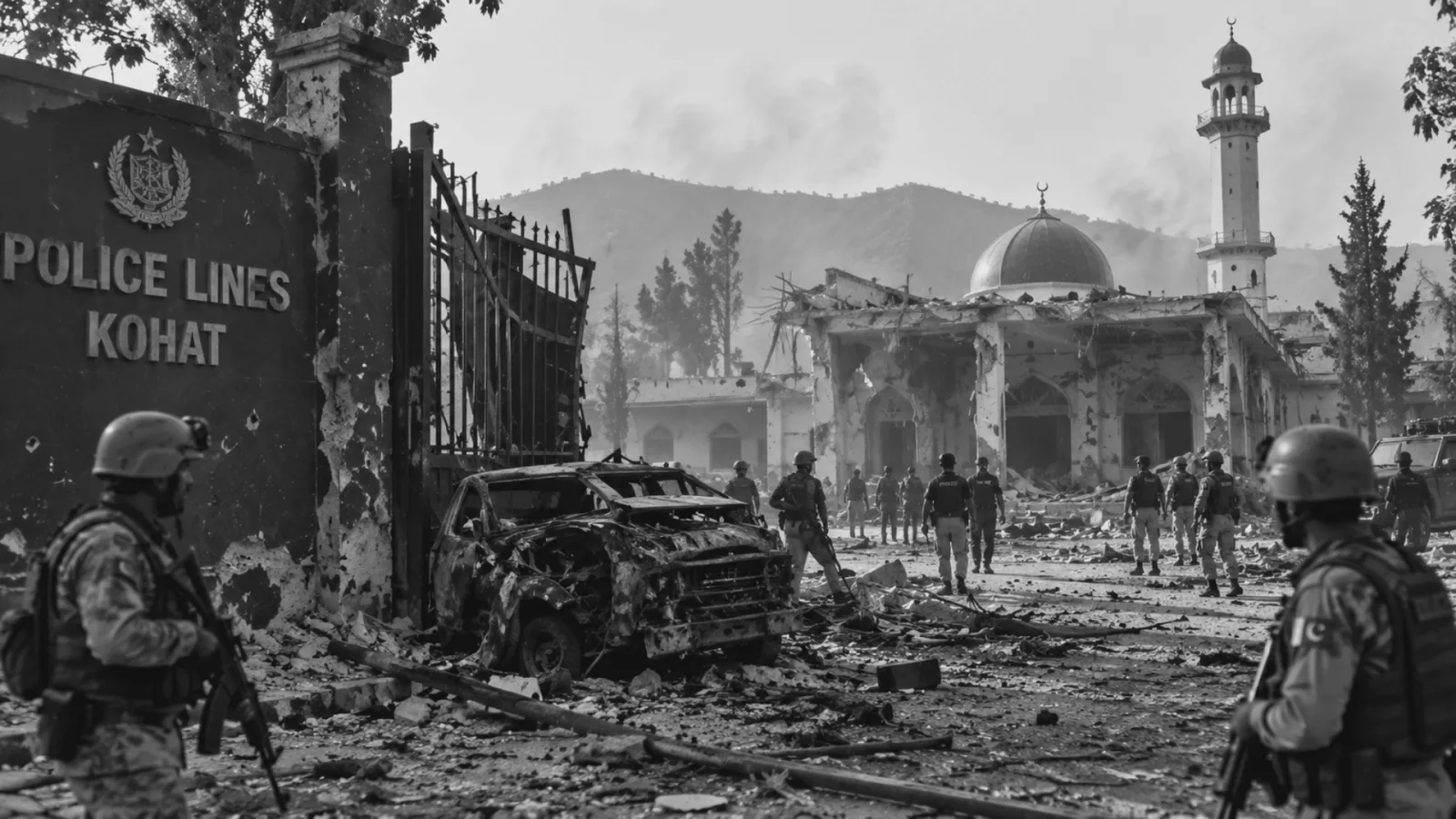
The location of the attack was significant because the mosque was situated inside a high-security police complex rather than being an isolated civilian place of worship. The compound housed police personnel and their families, while CTD and Special Branch facilities were also located within the wider complex. The initial VBIED therefore appears to have served both as a mass-casualty attack during Friday prayers and as a means of creating a breach through which the follow-on assault could be conducted. Pakistani officials subsequently reported that the attackers attempted to infiltrate the Police Lines after the explosion and engaged responding personnel in sustained firefights. A second suicide explosion was reported near the Special Branch building during the subsequent engagement.
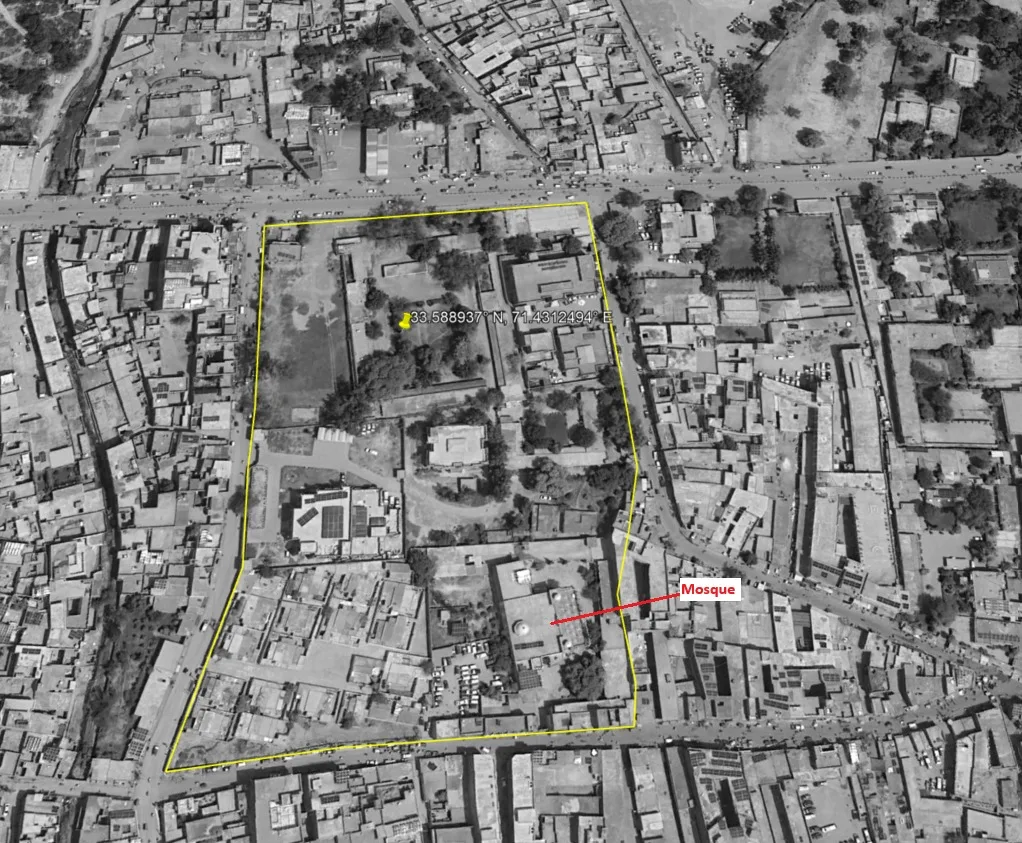
The assault developed into a prolonged clearance operation lasting approximately 20–22 hours. Initial resistance was provided by personnel already deployed within the Police Lines, including the Kohat police, CTD personnel and other law-enforcement elements. Elite Force commandos were subsequently involved in clearing sections of the compound. According to the Central Police Office, the operation was led by the Additional Inspector General of CTD, the Kohat Regional Police Officer and the District Police Officer.
Pakistan Army elements were also committed as the confrontation continued. Pakistani security sources reported that the Army's final clearance phase began after Fajr on 19 September, when remaining militants were located inside buildings within the compound. The operation was supervised by the General Officer Commanding (GOC) Kohat. Army commandos, together with bomb-disposal personnel, subsequently cleared and secured the affected buildings before returning control of the area to the police. A report in The News specifically identified the Special Service Group (SSG) as participating in the clearance operation under the GOC Kohat.
The available reporting therefore indicates the participation of several layers of the Pakistani security apparatus: Kohat district police, the Counter-Terrorism Department, Elite Force commandos, Special Branch personnel, bomb-disposal teams and Pakistan Army elements, including SSG personnel. Some media reports have additionally referred to the SSG Zarrar unit and infantry elements, but these details have not been consistently confirmed across official accounts.
The casualty picture evolved during the operation. Initial reports recorded substantially lower fatalities, but the confirmed Pakistani figure subsequently rose to 23, comprising 17 police personnel and six civilians, with more than 100 people injured. Some international reporting produced a higher figure of 31 deaths during the period when the siege was still underway, illustrating the difficulty of establishing an immediate casualty count during a prolonged attack. Pakistani police and CTD officials subsequently maintained the figure of 23.
Among those killed were senior and specialist personnel, including SP Traffic Akbar Shinwari and Dr Israel Orakzai, head of the paediatrics department at DHQ KDA Kohat. The concentration of police casualties reflects the character of the target: although the mosque was struck during prayers, the wider operation was directed against a police and counter-terrorism installation.
The assault was subsequently attributed to Ittehad-ul-Mujahideen Pakistan (IMP), an alliance established in 2025 involving the Hafiz Gul Bahadur Group, Lashkar-e-Islam and Harakat Inqilab-e-Islami Pakistan. Reporting identifies IMP as a militant coalition operating primarily in Khyber Pakhtunkhwa and linked to the wider ecosystem of Pakistani Taliban factions. An Afghan national identified as Mutiullah was also reported by Pakistani security sources to have been one of the suicide bombers. His reported identification does not, by itself, establish the extent of foreign organizational direction or facilitation, but Pakistani authorities have used the identification in their broader allegations concerning militant infrastructure based in Afghanistan.
A particularly important development following the attack was the response issued by Al-Qaeda in the Indian Subcontinent (AQIS). In its 19 September statement, AQIS addressed the Kohat incident directly. The statement condemned the targeting of the mosque, describing attacks against mosques, markets and other public places as impermissible and damaging to its stated objectives. At the same time, however, AQIS explicitly distinguished the mosque from Pakistani security institutions. It characterized the CTD and Police Lines as institutions opposed to its interpretation of Sharia and called upon militants to concentrate their attacks on institutions that it considers associated with the Pakistani state and its security apparatus. The statement therefore represents a rejection of the mosque component of the Kohat attack rather than a rejection of violence against Pakistani security forces.
This distinction is significant when assessing the AQIS dimension of the incident. AQIS did not claim responsibility for the Kohat operation in the statement, nor did it provide evidence that AQIS personnel directly participated in the attack. Its response instead provides an ideological framework within which attacks against Pakistani security institutions remain legitimate while attacks against Muslim worshippers are portrayed as counterproductive. Consequently, the statement should not be interpreted as proof of direct AQIS operational involvement in Kohat. It does, however, demonstrate ideological convergence between AQIS and militant networks conducting attacks against Pakistani security forces.
There is additional evidence for examining this relationship at the network level. Recent assessments have identified increasing cooperation between AQIS and Pakistani militant formations. The Pakistan Institute for Conflict and Security Studies reported that AQIS propaganda has highlighted IMP operations and described AQIS as having a significant role within the wider IMP network. The Khorasan Diary has likewise reported that the formation of IMP followed a period of coordination between Pakistani Taliban factions and AQIS and that the Hafiz Gul Bahadur faction subsequently developed a relationship with AQIS-linked networks.
This relationship is also consistent with the longer history of the Hafiz Gul Bahadur network. European Union Agency for Asylum reporting has documented historical links between the Hafiz Gul Bahadur Group, the Haqqani Network and Al-Qaeda, while earlier assessments have described Gul Bahadur's network as having hosted Al-Qaeda and other foreign militants in North Waziristan.
The Kohat attack can therefore be assessed as a multi-stage assault against a security installation, rather than solely as a mosque bombing. The VBIED created the initial mass-casualty event and disruption, while the subsequent armed penetration sought to exploit the resulting chaos and engage the police, CTD and Special Branch infrastructure inside the compound. The prolonged engagement eventually required the coordinated deployment of provincial police, CTD, Elite Force, bomb-disposal personnel and Pakistan Army elements, including SSG personnel, to regain control of the site. The AQIS statement adds a separate ideological dimension: while distancing itself from the targeting of the mosque, AQIS simultaneously reaffirmed its support for attacks against Pakistani security institutions. Taken together with the documented connections between AQIS, IMP and the Hafiz Gul Bahadur network, this places the Kohat assault within a broader militant ecosystem in which multiple organizations maintain overlapping ideological, organizational and operational relationships, although the available evidence does not establish that AQIS directly planned or executed the Kohat attack.
References
Dawn - “Kohat Police Lines attack: 8 terrorists killed as overnight clearance operation concludes”, 19 September 2026.
Covers the attack sequence, 23 confirmed fatalities, composition of the security response, CTD involvement, Elite Force, the clearance operation and the IMP claim. Dawn reportDawn - “Kohat operation ends; all eight terrorists dead”, 20 September 2026.
Provides the subsequent operational account, including the 21-hour engagement, eight militants killed and 17 police/six civilian fatalities. Dawn follow-up reportThe News - “Kohat attack: FIR reveals militants stormed Police Lines mosque amid gunfire after suicide blast”, 20 September 2026.
Useful for the FIR-derived reconstruction of the attack, including the VBIED, gunfire, grenades, Special Branch/CTD buildings and Army involvement in the final clearance phase. The News reportGeo News - “Kohat Police Lines attack: Eight militants killed as forces conclude clearance operation”, 19 September 2026.
Covers the official account from the Central Police Office and the joint police/security-forces operation. Geo News reportAssociated Press - “Pakistani forces end 20-hour standoff with militants in the northwest”, 19 September 2026.
Provides independent international reporting on the initial VBIED attack, subsequent armed assault, casualties and prolonged security operation. Associated Press reportAFP / Times of Israel - “At least 31 said killed in bombing and gun attack in Pakistan police station, fighting ongoing”, 19 September 2026.
Useful for documenting the discrepancy between preliminary international casualty reporting and the later Pakistani official figure. AFP reportVoicepk - “Eight militants killed as Kohat Police Lines clearance operation concludes”, 19 September 2026.
Provides additional details on the approximately 21–22-hour clearance operation and participation of Elite Force, CTD and security forces. Voice of Pakistan reportAQIS / As-Sahab Media - Statement AQS_12_003, “Regarding the Martyrdom of a Mosque in the Kohat Attack,” dated 19 September 2026.
Primary-source statement supplied with this assessment. The statement condemns attacks on mosques and other public places while explicitly distinguishing these from attacks against Pakistani security institutions. It should be treated as an AQIS primary-source communication and not as evidence that AQIS directly planned or executed the Kohat attack.United Nations Security Council Monitoring Team - S/2025/796, 2025.
Particularly relevant to the AQIS–IMP nexus. The report states that AQIS has increasingly focused on Pakistan and describes Ittihad-ul-Mujahideen Pakistan as a group believed to include elements of AQIS, the Hafiz Gul Bahadur Group and Lashkar-e-Islam. UN Security Council report S/2025/796Pakistan Institute for Conflict and Security Studies (PICSS) - “Al-Qaeda’s Evolution in South Asia: Leadership, Operational Capacity and the Emerging Militant Nexus,” September 2026.
Provides analysis of the emergence of IMP and the reported AQIS relationship with the coalition. PICSS assessmentEuropean Union Agency for Asylum (EUAA) - “Pakistan: Country Focus,” December 2024.
Provides background on the Hafiz Gul Bahadur network, including its reported historical links with the Haqqani Network and Al-Qaeda. EUAA Pakistan Country FocusDID Press - “AQIS Condemns Suicide Attack on Mosque in Pakistan’s Kohat,” 19 September 2026.
Independent reporting on the AQIS statement and its distinction between attacks on mosques/public places and attacks directed against Pakistani security institutions. DID Press report


