

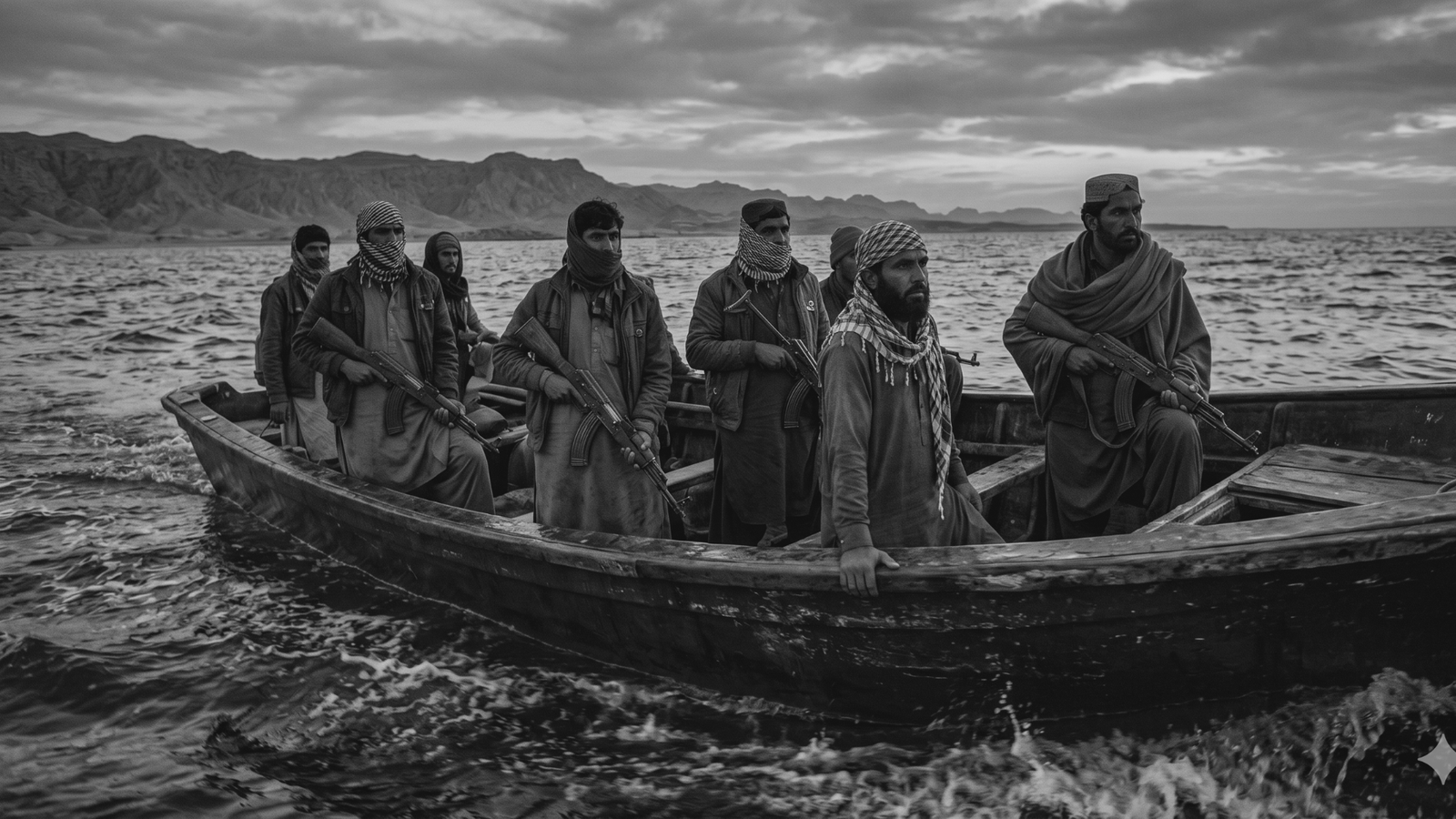
Maritime Expansion in Baloch Insurgency: Assessing the Jiwani Coast Guard Attack

On 12 April 2026, a Pakistan Coast Guards patrol boat was attacked in the Arabian Sea off Jiwani, Gwadar district, near the Iran–Pakistan maritime boundary. Three personnel were killed. The incident is significant because it appears to represent the first publicly reported instance of a Baloch separatist group targeting a Pakistani maritime security vessel, suggesting a potential expansion of insurgent activity into the maritime domain.
Incident
According to reporting citing Pakistani police and intelligence officials, the patrol boat was conducting routine maritime security operations when it came under armed fire in coastal waters near Jiwani, approximately 80 kilometres west of Gwadar. All three personnel on board were killed.
Open-source accounts indicate that the attack involved small-arms fire directed at the vessel. Precise details regarding the method of approach, duration of engagement, and type of platform used by the attackers have not been publicly disclosed.
Local and social-media reporting identified the casualties as Naik Afzal, Soldier Jameel, and Soldier Omar. These identities remain only partially corroborated in mainstream reporting.
Claim and Actor
The Balochistan Liberation Army claimed responsibility for the attack. Statements attributed to the group frame the operation as part of an expansion of its operational scope into the maritime domain.
Movement-linked channels referenced a “Jind faction” and described a new maritime-oriented unit termed “Hammal Maritime Defence Forces.” These designations have not been widely confirmed in independent reporting and appear primarily in insurgent-aligned information environments.
Pakistani officials have attributed the attack to Baloch separatist militants but have not publicly addressed the factional or structural claims made in militant messaging.
Analytical Core
The incident suggests a potential shift in insurgent tactics. Baloch militant groups have historically focused on land-based operations, including ambushes, improvised explosive device attacks, and assaults on infrastructure and security convoys. The targeting of a maritime patrol asset indicates a possible effort to extend operational reach into coastal and near-shore environments.
This development is consistent with the strategic importance of the Gwadar coastline. The area sits near critical maritime routes and is associated with infrastructure linked to the China-Pakistan Economic Corridor. Expanding activity into this domain may reflect an attempt to increase pressure on state presence in both symbolic and operational terms.
The attack location near the Iran–Pakistan maritime boundary is also notable. The area has historically seen smuggling activity and limited state control, which may provide permissive conditions for experimentation with new tactics. However, it remains unclear whether the attackers possessed dedicated maritime capabilities or adapted existing methods to a coastal environment.
The characterization of the incident as a first-of-its-kind maritime attack is consistent across multiple reporting streams. If accurate, it suggests an incremental evolution rather than a sustained pattern at this stage.
Security Implications
The attack may prompt adjustments in Pakistan’s coastal security posture. Increased patrols, revised rules of engagement, and enhanced surveillance in the Gwadar–Jiwani belt are likely responses.
From an insurgent perspective, even a limited maritime capability could complicate security planning. The ability to target vessels, even with small arms, introduces additional risk to patrol operations and may require resource reallocation.
The incident may also indicate an intent to signal capability rather than to sustain regular maritime operations. If so, it could function as a demonstration effect aimed at both domestic and external audiences.
Gaps and Uncertainty
Several aspects of the incident remain unclear. The exact tactics used, including the platform or method by which attackers approached the patrol boat, have not been confirmed. It is also uncertain whether the operation involved pre-planned maritime capability or opportunistic targeting from the coastline.
The extent to which the claimed “Hammal Maritime Defence Forces” represents an organized and sustained unit remains unverified. Similarly, the degree of institutional support within the BLA for maritime operations is unclear.
Finally, it remains uncertain whether this incident reflects the beginning of a broader operational trend or a single, isolated adaptation. Further incidents or corroborating intelligence would be required to assess whether a durable shift in insurgent capability has occurred.
Image Source: Gemini
The image is for illustrative purposes only and does not endorse, promote, or support any form of violence or terrorism.


