

SITREP: Jaish-e-Mohammed Restructuring Signals Shift in Pakistan-Based Terror Ecosystem
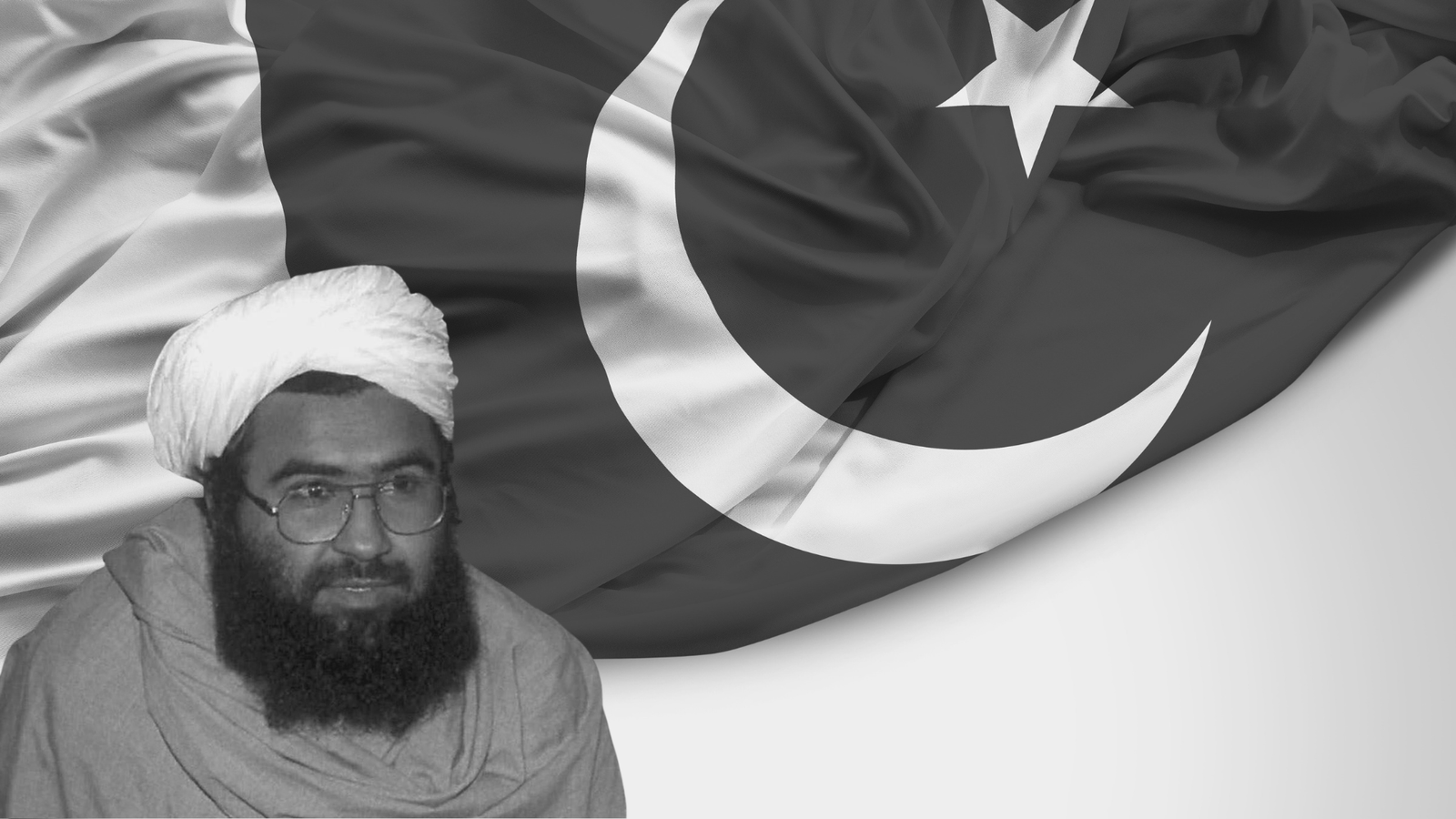
ISI Enforces Secrecy Amid Masood Azhar Health Concerns
A key factor influencing this restructuring is the reported deterioration in Azhar’s health. Intelligence-linked inputs indicate that he may be in a severely weakened condition and possibly unable to move independently. Pakistan’s Inter-Services Intelligence is assessed to have imposed strict information control measures, including a directive to Pakistani media not to report on Azhar following Operation Sindoor. This blackout appears designed to prevent morale collapse within the ranks and to enable a controlled leadership transition.
Azhar has remained largely absent from public view since the Balakot airstrikes, with only a single confirmed appearance thereafter. Since then, communication has been limited to unverified audio clips, many of which are assessed to be recycled older recordings aimed at sustaining cadre morale. Even recent audio releases have reportedly indicated a frail voice, reinforcing assessments of deteriorating health. Notably, his illness has also been publicly alluded to by Shah Mehmood Qureshi, lending additional weight to these claims.
Masood Azhar Health and Leadership Opacity: OSINT Assessment (2022–2026)
A review of Indian media reporting over the past four years indicates that the trajectory surrounding Masood Azhar is best understood not through isolated claims, but through a consistent pattern of behavioural indicators. There has been no official confirmation of his medical condition; however, coverage across major Indian outlets points to a steady decline in visibility, communication, and direct leadership signalling since 2022.
The most significant shift emerges in the degradation of Azhar’s communication profile. Earlier reliance on video messaging has largely disappeared, replaced first by sporadic audio statements and increasingly by written or third-party messaging. This transition from video to audio to written communication aligns with established patterns observed in militant leadership under physical or operational constraints. Notably, Azhar’s absence during critical inflection points, including the aftermath of Indian strikes in 2025, deviates from historical precedent and suggests either physical incapacity or tightly controlled concealment.
Recent reporting in 2026 marks a qualitative escalation, with some Indian sources describing his condition as “serious” or “critical.” While unverified, these claims align with broader indicators of increased secrecy, including tighter information control attributed to the ISI. The lack of credible visual confirmation, combined with controlled narrative management, suggests a deliberate effort to obscure the true extent of his condition.
Emerging Leadership Structure and Succession Dynamics
Parallel inputs indicate that a structured leadership transition is already underway. The ISI appears to be shaping a compact top command of approximately five key figures to maintain tighter control over the organisation. Notably, Sadiya Azhar has been elevated to lead the group’s women’s wing, ensuring continued family influence within the organisation.
Speculation persists regarding the status of Abdul Rauf Azhar, whose reported death in 2025 remains unconfirmed. If alive, he is assessed as a leading contender for succession, although concerns about operational exposure may limit his public role. In parallel, Talha al-Saif is believed to be a key operational figure and a strong candidate to oversee day-to-day activities, particularly given his role in organisational initiatives such as the women’s wing.
Additional figures believed to form part of the emerging leadership core include Mufti Asghar (operations), Mohammad Hassan (spokesperson), and Maulana Sari Masood Ahmed (radicalisation and propaganda). The emphasis appears to be on maintaining a small, tightly controlled leadership group, while scaling recruitment at the ground level.
Proxy Warfare and Propaganda Ecosystem: Kashmir Tigers vs TRF and PAFF
Since April 2021, Jaish-e-Mohammed has increasingly operated through its proxy formation Kashmir Tigers, using it as a deniable front for attacks in Jammu and Kashmir. However, a comparative analysis of the propaganda ecosystems of Kashmir Tigers and The Resistance Front and People's Anti-Fascist Front, both linked to Lashkar-e-Taiba, reveals a clear disparity in sophistication.
LeT-linked proxies demonstrate a far more structured and coordinated information warfare strategy. Their digital ecosystem is characterised by a larger network of interconnected proxy accounts functioning as echo chambers, amplifying narratives in a synchronised manner. The graphical content produced by TRF and PAFF is notably more refined, including well-designed pseudo-press releases, professionally edited videos, and grammatically accurate English messaging. This aligns closely with the evolution of ISI-backed plausible deniability frameworks, often described as “Plausible Deniability 2.0,” where TRF and PAFF consistently attempt to project themselves as indigenous, home-grown resistance movements.
In contrast, Kashmir Tigers’ propaganda output remains comparatively unsophisticated and inconsistent. Its messaging lacks narrative coherence, technical polish, and the layered amplification architecture seen in LeT proxies. The failure to convincingly sustain a “local insurgency” narrative suggests limitations in strategic communication capacity. This disparity reflects deeper organisational differences and reinforces indicators of decentralised or weakened leadership within JeM.
Operational Shift Toward Decentralised Terror Cells
The restructuring reflects a broader trend toward low-signature, decentralised operational models within Pakistan-based militant ecosystems. By reducing its organisational footprint and shifting to smaller, compartmentalised units, JeM is likely aiming to enhance survivability, deniability, and adaptability. While this may reduce the likelihood of large-scale, high-visibility attacks in the near term, it significantly increases the complexity of detection and disruption for security agencies.
Leadership Uncertainty and Risk of Fragmentation
Leadership opacity introduces short-term instability but may accelerate JeM’s evolution into a more networked structure. The transition phase remains sensitive, with the ISI seeking to avoid internal fractures while ensuring continuity. The continued circulation of old audio messages and controlled information flow suggests an effort to maintain the perception of leadership stability during this period.
Strategic Implications for India’s Counterterrorism Posture
The ongoing transition within JeM underscores the need for adaptive counterterrorism strategies focused on decentralised threats. Smaller, covert cells operating with limited signatures will demand enhanced intelligence fusion, behavioural tracking, and proactive disruption frameworks. Despite internal challenges, JeM remains a relevant actor within the broader Pakistan-based terror ecosystem, with continued backing structures ensuring its persistence.
CNAWS SITREP Bottom Line
JeM’s restructuring, coupled with uncertainty around its leadership, signals a transition phase rather than decline. The sustained pattern of declining visibility, communication degradation, enforced secrecy, emerging succession structuring, and comparatively weaker proxy propaganda architecture suggests that JeM may already be operating in a de facto post-Azhar model. This transition is also increasingly shaped by the logic of plausible deniability, with the organisation relying on proxy fronts such as Kashmir Tigers to obscure attribution and reduce direct linkage to its core leadership. However, unlike more refined proxy ecosystems linked to Lashkar-e-Taiba, JeM’s deniability framework remains less sophisticated and inconsistently executed. The resulting evolution toward a leaner, more covert, and decentralised structure, combined with attempts at maintaining plausible deniability, is likely to complicate future counterterrorism efforts while reshaping the competitive dynamics among Pakistan-based militant groups.


