

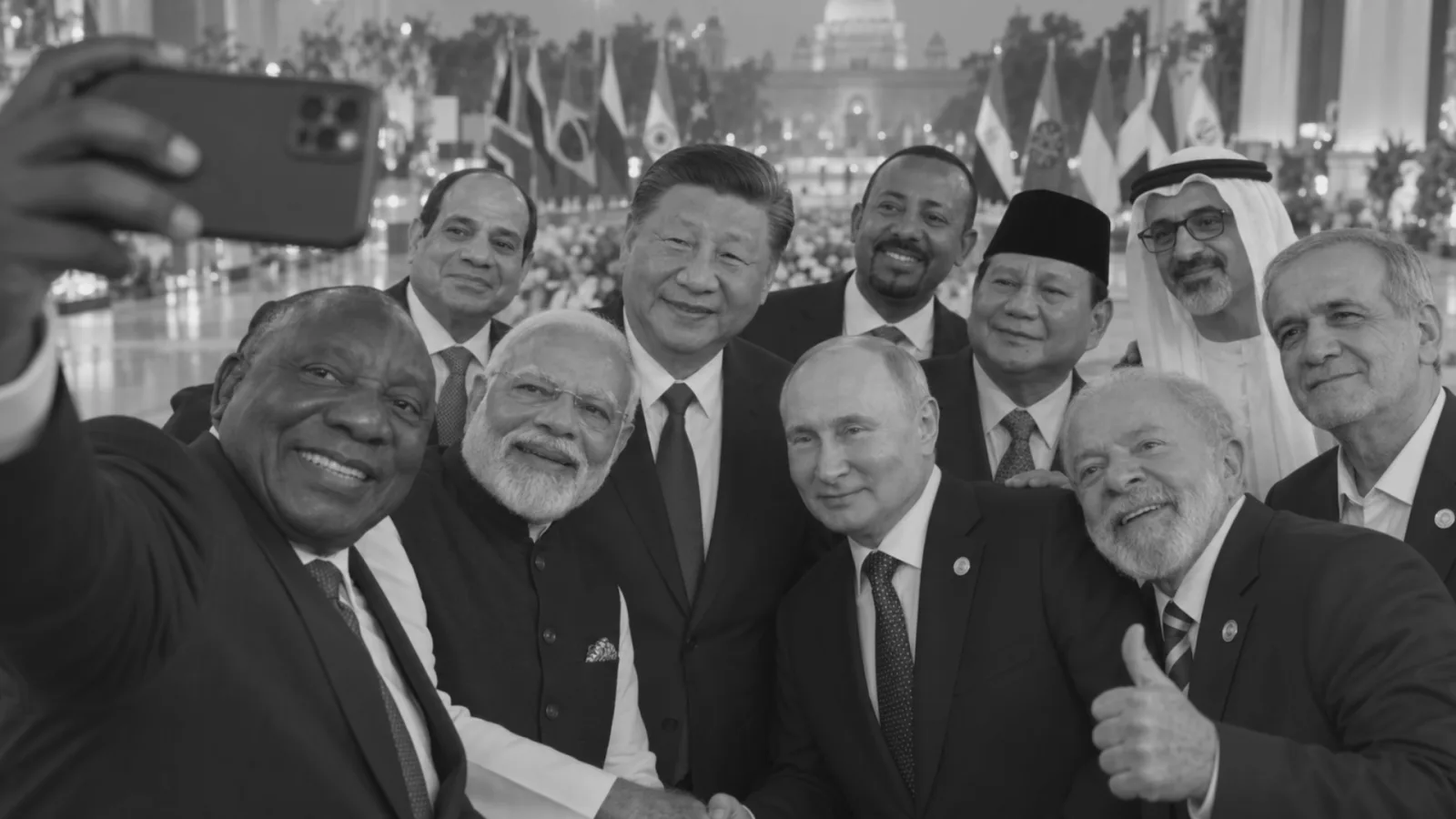
Xi Leaves India After BRICS, but the LAC and Pakistan Still Set the Limits of the Thaw
The Summit Produced a Political Thaw, Not a Strategic Settlement
The official Indian readout from the Modi-Xi meeting was deliberately constructive but carefully qualified. Both leaders agreed that bilateral relations should be approached from a "strategic and long term perspective" and that differences should not become disputes. Modi returned to India's established formulation of "mutual respect, mutual sensitivity and mutual interest", while making clear that peace and tranquillity along the border remained the "essential basis" for further development of the relationship. The two sides also committed themselves to pursuing a fair and mutually acceptable boundary settlement, improving mobility and business links, addressing India's structural trade imbalance with China, and securing more predictable market access.² The Chinese account was warmer. Beijing described India and China as "partners rather than rivals" and "development opportunities rather than threats". Xi called for greater cooperation in direct flights, trade, multilateral institutions and people-to-people exchanges. More revealingly, the Chinese readout attributed to Modi assurances concerning India's independent foreign policy and continuity in its positions on Taiwan and Tibet. These points were absent from the Indian official account.³ That difference in emphasis is important. New Delhi wanted the meeting to establish that normalisation remains conditional on stability at the border and a more balanced economic relationship. Beijing preferred a broader political narrative in which the two Asian powers recognise one another as strategic partners, limit the influence of "third parties", and prevent bilateral disputes from obstructing wider cooperation. Both positions are compatible with a thaw. They are not yet evidence of strategic convergence.
For Modi, the immediate objective is a stable northern frontier that allows India to allocate political, economic and military resources elsewhere without accepting a new post-2020 territorial reality by default. India also needs greater predictability in Chinese supplies, especially industrial inputs, equipment and components, while seeking improved access for Indian products in the Chinese market. For Xi, stabilising relations with India removes an unnecessary source of strategic pressure at a time when China faces wider geopolitical and economic competition. Preventing the India-China relationship from becoming structurally adversarial also reduces the incentive for New Delhi to deepen security alignment with the United States, Japan and Australia. At the same time, Beijing has shown no sign that improved relations with India require it to dilute its partnership with Pakistan. That is where the limits of the current thaw become visible.
Disengagement Has Occurred. De-escalation Has Not.
The single most important distinction in assessing the LAC is between disengagement and de-escalation. Disengagement removes troops from immediate face-off positions and creates separation at specific friction points. De-escalation requires a wider reduction of the combat power assembled across the theatre, including infantry formations, armour, artillery, air defence, aviation and supporting logistics. De-induction goes further by returning forces towards peacetime deployments. India and China achieved important disengagement agreements after the 2020 crisis, culminating in the October 2024 arrangement that addressed the remaining standoff areas and restored patrolling arrangements in Depsang and Demchok. The risk of soldiers confronting each other at previously volatile friction points was consequently reduced.⁴ Yet the broader military posture has not returned to anything resembling the pre-2020 situation.
A July 2026 assessment by Carnegie India estimated that 50,000 to 60,000 troops remain deployed by each side in forward areas along the India-China border. Indian stakeholders cited in the study described the force posture as being at quasi-wartime levels. The same assessment identified de-escalation of these deployments as the next major requirement for India.⁵ This is the hard military reality beneath the summit language. Indeed, the diplomatic sequence itself confirms the distinction. The 25th round of Special Representatives' talks between National Security Adviser Ajit Doval and Chinese Foreign Minister Wang Yi in Beijing on 25 August produced useful mechanisms. The two sides agreed to work towards an "Early and Substantial Harvest" on boundary delimitation and border management, create additional senior military meeting points, establish additional military hotlines in the Eastern and Middle sectors, and continue negotiations towards a boundary settlement.⁶
What the talks did not announce was a substantial withdrawal of the larger military formations positioned behind the disengaged friction points. That matters more than the number of meetings held. India and China have therefore moved from an acute border crisis towards a form of armed détente. The probability of an accidental tactical clash has been reduced, but both sides retain the forces and logistics necessary to reinforce the LAC rapidly if the political relationship deteriorates.
China Has Changed the Military Geography of the LAC
Even troop numbers alone do not capture the transformation that has occurred since 2020. China has systematically improved its ability to move aircraft, troops, missiles, supplies and surveillance assets across the Tibetan Plateau and Xinjiang. CSIS's ChinaPower project has identified at least 37 airports and heliports constructed or upgraded in Tibet and Xinjiang since 2017, at least 22 of which are military or dual-use. Three newer airports in Tibet, at Lhuntse, Ngari-Burang and Shigatse Tingri, lie less than 60 kilometres from the disputed frontier. Hotan has also undergone major expansion, while road and rail development has increased the PLA's ability to move forces across what was historically a difficult logistical environment.⁷ Further east, dual-use infrastructure and improved transport links around Nyingchi provide faster access towards the Arunachal Pradesh sector. Chinese border villages, roads, communications infrastructure and military support facilities are increasingly integrated into a broader system designed not merely to defend Tibet but to sustain forces close to contested territory.
There are also signs that the PLAAF is exercising more advanced airpower from western bases. Commercial satellite imagery reported in July 2026 showed eight J-20 stealth fighters at Hotan and four more at Damxung in Tibet within a period of roughly two weeks. The imagery does not by itself establish permanent J-20 basing at these locations. It does, however, demonstrate the ability to deploy fifth-generation combat aircraft into the theatre rapidly.⁸
This changes the strategic calculation. The question for India is no longer simply how many PLA soldiers occupy a particular position. It is how quickly China can concentrate combat power across the theatre. Roads, tunnels, airfields, hardened shelters, fuel storage, rail connectivity, air defence systems and forward logistics all reduce mobilisation time. A politically quieter LAC can therefore coexist with a militarily more capable one. That is why genuine stabilisation will eventually require confidence-building measures that address force posture and military activity, not merely patrol management.
Pakistan Remains the Hardest Test of Beijing's Intentions
If the LAC is the first structural constraint on the thaw, Pakistan is the second. China is not simply one of Pakistan's defence suppliers. It has become overwhelmingly the most important one. According to SIPRI's 2026 arms-transfer data, Pakistan became the world's fifth-largest recipient of major arms during 2021 to 2025. Its arms imports increased by 66 percent compared with 2016 to 2020. China accounted for 80 percent of Pakistan's major arms imports, up from 73 percent in the previous five-year period.⁹
The significance of this relationship became much clearer during the May 2025 India-Pakistan conflict. Reuters subsequently reported, citing two US officials, that Pakistan used Chinese-built J-10 fighters to shoot down at least two Indian combat aircraft. Reuters later reconstructed an engagement in which Pakistan combined the J-10C, the Chinese PL-15 air-to-air missile and a wider sensor and data-link network to engage Indian aircraft. India has acknowledged suffering initial aerial losses without publicly detailing the complete number or circumstances.¹⁰ More consequential was the allegation made in July 2025 by Indian Deputy Chief of Army Staff Lieutenant General Rahul R. Singh that China had supplied Pakistan with "live inputs" concerning Indian positions during the fighting. Singh did not publicly provide evidence demonstrating how India established that intelligence transfer, and Pakistan subsequently rejected the allegation as factually incorrect. It therefore remains a contested claim rather than an independently established fact.¹¹ But the strategic problem exists even without proving direct Chinese participation.
Pakistan's growing inventory of Chinese fighters, missiles, sensors, warships, air defence systems and other military equipment means that any future India-Pakistan conflict will simultaneously become an operational laboratory for Chinese defence technology. Pakistan gains access to increasingly sophisticated capabilities while China gains insight into the performance of its systems against Indian, Russian, French, Israeli and indigenous equipment. This creates a peculiar asymmetry in the India-China thaw. Beijing can pursue diplomatic stabilisation with New Delhi while continuing to improve the military capability of India's principal western adversary. The BRICS summit did not resolve that contradiction.
China's endorsement of the New Delhi Declaration is nevertheless politically significant. The declaration strongly condemned the 22 April 2025 terrorist attack in Jammu and Kashmir in which 26 people were killed. It also called for action against cross-border terrorist movement, financing and safe havens, demanded zero tolerance for terrorism and rejected double standards.¹² That was a diplomatic gain for India. But it should not be read as evidence that Beijing has reconsidered its strategic relationship with Pakistan. China has repeatedly demonstrated that multilateral counterterrorism language and bilateral military cooperation with Islamabad can operate on separate tracks.
The Economic Relationship Is Becoming More Important and More Dangerous
India also enters this thaw with an economic vulnerability that did not disappear during the years of political confrontation. India imported $131.63 billion worth of goods from China in FY2025-26 while exporting only $19.47 billion, producing a bilateral merchandise deficit of approximately $112.16 billion. China again emerged as India's largest trading partner.¹³ The more important figure, however, is the composition of those imports. GTRI estimates that China supplies around 30.8 percent of India's industrial-goods requirements. Around $82.6 billion, or roughly two-thirds of imports from China, is concentrated in electronics, machinery, computers and organic chemicals. China accounts for approximately 43 percent of India's electronics imports, 40 percent of machinery and computer imports and 44 percent of organic chemicals.¹⁴ A study released days before the BRICS summit by Koan Advisory Group and the Institute of Chinese Studies found that China supplied at least 80 percent of India's imports across 71 individual eight-digit tariff lines during 2025-26. Forty-six of these had crossed the 80-percent threshold only since 2018-19.¹⁵ India's China problem is therefore no longer adequately described as a trade-deficit problem. It is increasingly a production-dependence problem.
Chinese inputs sit inside Indian electronics, pharmaceuticals, electric vehicles, solar manufacturing, telecommunications, infrastructure and advanced manufacturing supply chains. Economic separation would impose significant costs on India. Yet deepening the same dependence without diversification would increase Chinese leverage during a future crisis. For New Delhi, the optimal outcome is neither indiscriminate decoupling nor a return to the pre-2020 economic model. India needs selective economic engagement that uses Chinese capital, components and technology where necessary while simultaneously localising strategic supply chains and diversifying sources for critical inputs. The language adopted by Modi and Xi on "structural trade imbalance", supply-chain concerns and "meaningful and predictable market access" shows that New Delhi is trying to place precisely this issue at the centre of normalisation. The test will be whether those formulations generate measurable change.
BRICS Can Survive the Rivalry Because BRICS Is Not an Alliance
The apparent contradiction between India-China competition and BRICS cooperation is less severe than it first appears. BRICS does not require India and China to possess strategic trust. It requires sufficient overlapping interests to produce consensus on selected issues. The New Delhi Declaration demonstrates that this remains possible. BRICS members agreed on institutional reform, development cooperation, resistance to trade-restrictive measures, counterterrorism, technology, economic resilience and a diplomatic approach towards ongoing international conflicts. The declaration explicitly reaffirmed consensus, sovereign equality and mutual respect as operating principles of the grouping. China will assume the BRICS chair in 2027 and host the next summit.¹⁶
India and China therefore do not need to resolve the LAC to cooperate on IMF reform, World Bank representation, the Global South, climate finance, trade governance or institutional reform. Indeed, compartmentalisation may become the defining feature of the relationship. New Delhi and Beijing can cooperate in BRICS and the G20, expand bilateral trade, resume flights and tourism, and coordinate on selected multilateral questions while simultaneously preparing for military contingencies against one another. That is not reconciliation. It is managed competition. And if managed effectively, it may still be preferable to the uncontrolled competition that followed 2020.
What Would Prove That the Thaw Is Real?
Summit language should now give way to observable indicators. Over the next six to twelve months, CNAWS assesses that six developments would provide stronger evidence that India and China are moving towards genuine strategic stabilisation.
A formal process of military de-escalation and de-induction along the LAC. The clearest signal would be negotiated withdrawal of significant portions of the estimated 50,000 to 60,000 troops deployed on each side, together with reductions in armour, artillery and other supporting assets. Without this, disengagement remains largely tactical.
A durable border-management arrangement beyond individual friction points. Restoration of predictable patrolling, functioning military hotlines, faster local incident resolution and measurable progress through the new boundary mechanisms would reduce the possibility that another local confrontation grows into a strategic crisis.
Greater transparency surrounding major exercises and forward air deployments. Temporary deployment of J-20s or other advanced systems is not itself proof of aggressive intent. Persistent concentration of high-end airpower, however, would sit uneasily with claims of military de-escalation. Reciprocal notification mechanisms for major exercises would be a useful next step.
Evidence that China is separating its Pakistan partnership from India-Pakistan crisis escalation. Chinese arms sales to Pakistan are unlikely to disappear. A more meaningful test would be whether Beijing refrains from operational intelligence, targeting or other forms of direct military enabling during a future India-Pakistan confrontation.
Measurable improvement in economic reciprocity. India should look for better market access, fewer supply restrictions, more predictable licensing and a gradual reduction in extreme single-source dependence. Bilateral trade reaching another record would not by itself indicate progress if India's strategic import concentration continues to increase.
Continuity after the summit cycle. The real diplomatic test will come when there are no television cameras. Progress in the Special Representatives mechanism, implementation of new hotlines, continuing mobility and aviation links, and China's handling of Indian priorities during its 2027 BRICS chairship will show whether the current thaw has institutional depth.
CNAWS Assessment
Xi Jinping's return to India mattered. His departure leaves India-China relations in a better political condition than at any point immediately following the 2020 crisis. Senior-level dialogue has resumed. Friction-point disengagement has reduced immediate military danger. Flights and exchanges are being restored. Trade is expanding. The boundary mechanisms are functioning again, and both governments have political reasons to prevent another uncontrolled confrontation. But strategic stabilisation has not yet occurred.
The PLA retains a substantial forward force posture. China's infrastructure has made its western military theatre considerably more responsive than it was before Galwan. Pakistan's armed forces are becoming more dependent on, and more capable because of, Chinese military technology. India's own industrial economy remains heavily exposed to Chinese supply chains. The result is best understood as armed détente rather than rapprochement.
India should welcome the diplomatic opening because a stable relationship with China serves Indian interests. But New Delhi should judge the thaw through deployments rather than declarations, supply chains rather than summit trade figures, and Chinese behaviour during the next India-Pakistan crisis rather than BRICS photographs. The strategic objective does not need to be friendship between India and China. A more realistic objective is predictable rivalry in which neither side believes it can gain from military surprise, local coercion or uncontrolled escalation. The Modi-Xi meeting has created an opportunity for that outcome. It has not yet delivered it.
References
Prime Minister of India, “PM’s Bilateral Meeting with Chinese President Xi Jinping,” September 12, 2026. Official PMO readout; The Economic Times, “Chinese President Xi Jinping Departs from Delhi after a 24-Hour BRICS Blitz,” September 13, 2026. Report
Prime Minister of India, “PM’s Bilateral Meeting with Chinese President Xi Jinping,” September 12, 2026. Official readout
Ministry of Foreign Affairs of the People's Republic of China, “President Xi Jinping Meets with Prime Minister Narendra Modi of India,” September 12, 2026. Chinese MFA readout
Reuters, “India-China Relations, from Conflict to Cautious Thaw,” September 12, 2026. Reuters backgrounder
Darshana M. Baruah et al., “Threading the Needle: India’s Path Forward with China,” Carnegie Endowment for International Peace, July 2, 2026. Carnegie study
All India Radio, “India and China Reaffirm Commitment to Peace and Tranquillity in Border Areas,” August 26, 2026. Akashvani report; Ananth Krishnan, “India and China’s Eight Point Consensus on the Boundary Question,” The India China Newsletter, August 26, 2026. Eight-point outcome
ChinaPower Project, Center for Strategic and International Studies, “Tracking China’s Western Airpower Expansion,” accessed September 2026. ChinaPower dataset; ChinaPower Project, “How Is China Expanding Its Infrastructure to Project Power Along Its Western Borders?” updated November 9, 2023. CSIS assessment
Shivani Sharma, “12 Chinese J-20 Stealth Jets Deployed at Bases Facing India, Satellite Images Show,” India Today, July 30, 2026. Satellite imagery report
Stockholm International Peace Research Institute, “Global Arms Flows Jump Nearly 10 Per Cent as European Demand Soars,” March 9, 2026. SIPRI release; SIPRI, Trends in International Arms Transfers, 2025, March 2026. SIPRI fact sheet
Reuters, “Pakistan’s Chinese-Made Jet Brought Down Two Indian Fighter Aircraft, US Officials Say,” May 8, 2025. Reuters report; Reuters, “How Pakistan Shot Down India’s Cutting-Edge Fighter Using Chinese Gear,” August 2, 2025. Reuters investigation
Reuters, “China Helped Pakistan with ‘Live Inputs’ in Conflict with India, Indian Army Deputy Chief Says,” July 4, 2025. Reuters report; Reuters, “Pakistan Army Chief Rejects Indian Allegation of Chinese Help in May Conflict,” July 7, 2025. Pakistan response
Prime Minister of India, “BRICS New Delhi Declaration: Building for Resilience, Innovation, Cooperation and Sustainability,” September 12, 2026, paras. 40–41. New Delhi Declaration
Press Trust of India, “China Becomes India’s Top Trade Partner in FY26; Deficit Widens to $112 Bn,” Business Standard, April 15, 2026. Trade data
“China Supplies over 30% of India’s Industrial Goods; Overdependence on Single Nation Critical: GTRI,” The Economic Times, April 28, 2026. GTRI findings
“India’s Electronics Import Reliance on China Driven by Core Components, Targeted Localisation Needed: Report,” The Tribune, September 9, 2026. Koan-ICS study coverage
Prime Minister of India, “BRICS New Delhi Declaration: Building for Resilience, Innovation, Cooperation and Sustainability,” September 12, 2026. Full official declaration
Image Credits: ChatGPT


